In addition to the annual fall Exchange magazine, our enewsletter keeps you updated throughout the year.
Want to stay in the loop? Subscribe by emailing your contact information to Mary Sullivan at mjbowen@ksu.edu.
Spring 2025 enewsletter
We are wrapping up a successful 2024-25 academic year. Read more about all of the awards received by our students and faculty this spring.
Featured in this newsletter are articles on:
- Farm and Ranch Transition Conferences
- 2025 Outstanding Seniors
- Faculty Awards 2025
- Day of Giving 2025
- Farm and Agribusiness of Spain and Portugal
- Returning the Family Farm
- Calendar of upcoming events
In the fall, we will honor a new distinguished alumni member at our annual scholarship and awards banquet. We hope you will join us for the scholarship banquet Friday, October 10 and at the tailgate event before the October 11 football game against TCU. Be watching for more information on both events.
Our achievements are directly related to the continued support of our alumni and corporate sponsorships. We appreciate the dedication and engagement of our alumni and outside supporters. Thank you to our generous donors who contributed to our student competition team during the Day of Giving in April.
Please take time to learn more about the activities of our department. We also encourage you to share your career and family developments so we can keep your fellow alumni informed. Please email me at afeather@ksu.edu or Mary Sullivan, our communications coordinator, at mjbowen@ksu.edu with information you would like to share with your fellow alumni.
Go Cats!
Dr. Allen Featherstone
Department Head, Professor, University Distinguished Professor
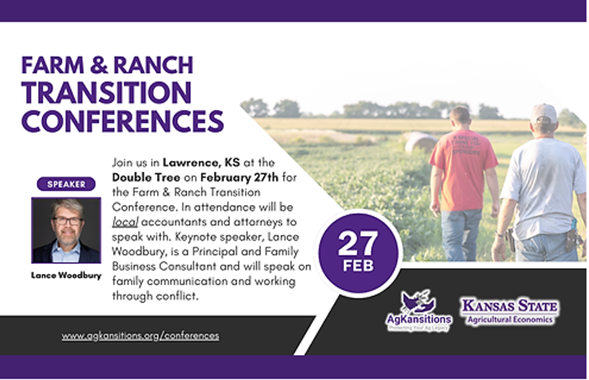
As Kansas farm and ranch families face the realities of aging ownership and uncertain succession, a series of conferences hosted this February by Kansas State University offered producers practical tools to begin planning for the future of their operations.
The Farm and Ranch Transition Conferences, held in Colby, Wichita and Lawrence from February 25–27, 2025, aimed to raise awareness about the importance of transition and succession planning. The conferences were organized by K-State’s Office of Farm and Ranch Transition, Ashlee Westerhold and funded by the USDA Farm Service Agency’s Conservation Reserve Program Transition Incentives Program (CRP-TIP).
“We’re really trying to raise awareness around farm transition planning—why it matters, and how to start the conversation,” said Westerhold, Director of the Farm and Ranch Transition Office with K-State. “Even if you don’t have a successor lined up, you still need an exit strategy.”
The conferences were open to all Kansans but particularly targeted toward retiring farmers, landowners, and ranchers looking to begin the transition process. Each event featured local attorneys and accountants specializing in estate planning and agricultural law, allowing participants to connect with professionals in their area.
Keynote speaker Lance Woodbury, a nationally known family business consultant, addressed the challenges of transitioning a farm to the next generation and emphasized the role of communication in reducing family conflict.
“Lance helps families understand that transition isn’t just financial—it’s personal,” Westerhold said. “This year, we also focused more heavily on what to do if you don’t have a successor, which is a real and growing concern.”
Now in its third year, the traveling conference series has become a respected extension program. Westerhold noted that many attendees have called it “the best extension event they’ve ever been to” due to its practical focus and relatable subject matter.
Roughly 100 participants attended each location this year, resulting in around 300 statewide. While attendance varies annually, Westerhold said the demand remains strong as more producers recognize the need for intentional planning.
In addition to hosting, Westerhold also managed speaker recruitment, marketing, and served as emcee at each site.
“This isn’t just about retirement,” Westerhold said. “It’s about making sure your life’s work continues in a way that honors your legacy—whether that means passing it on to family or preparing to exit with clarity.”
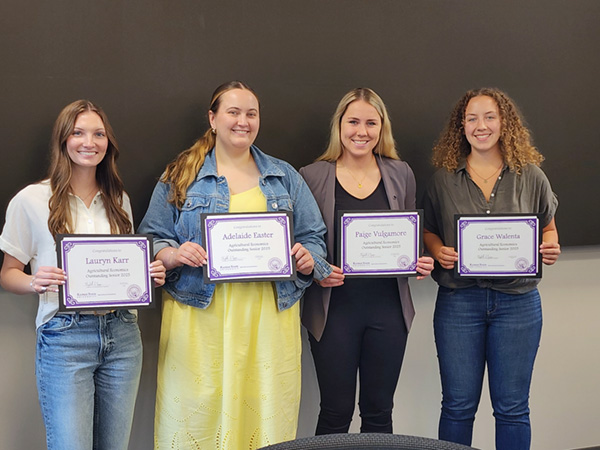
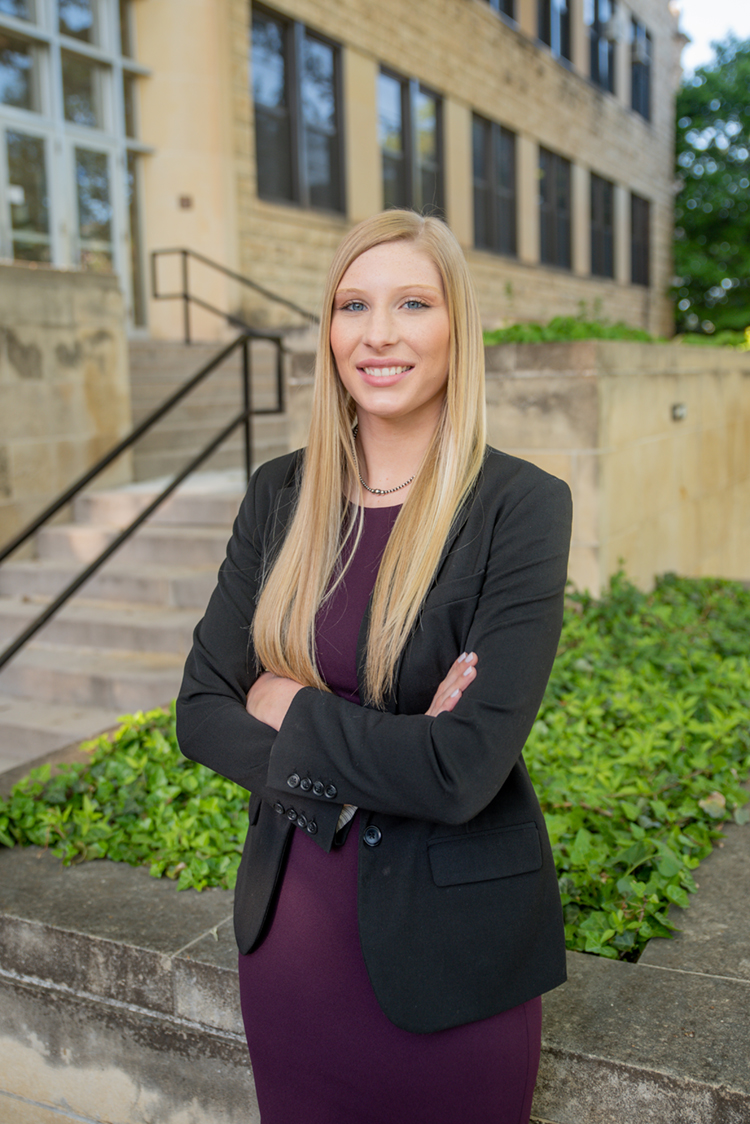
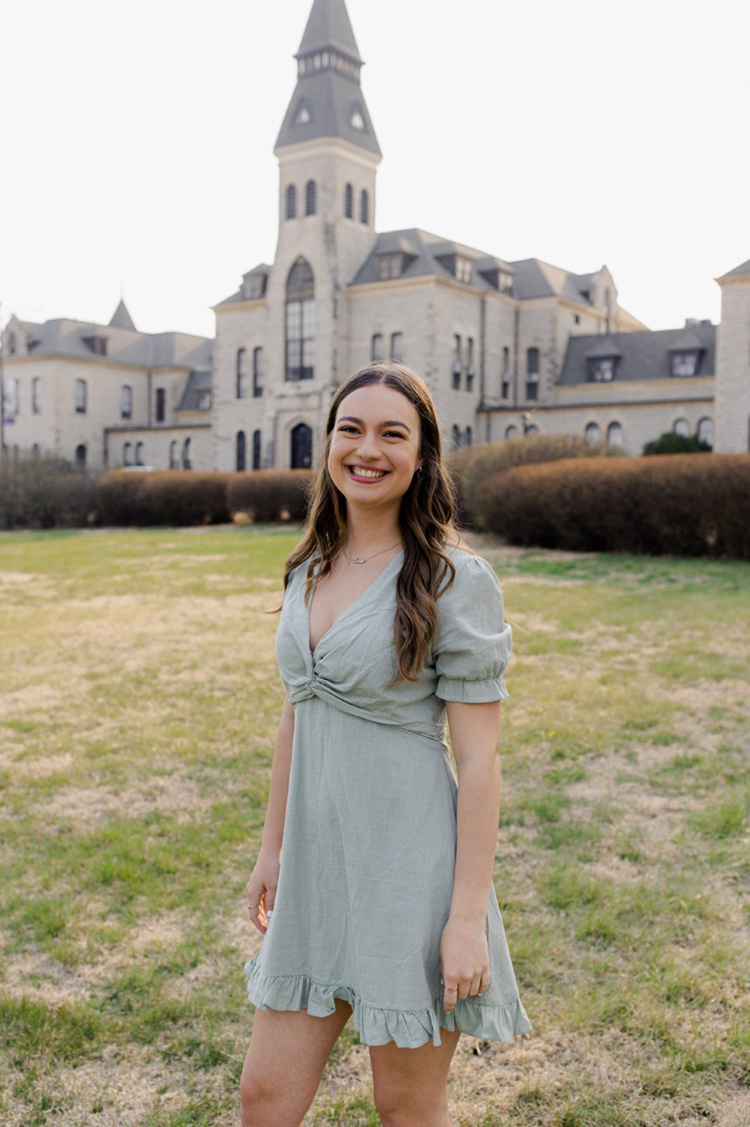
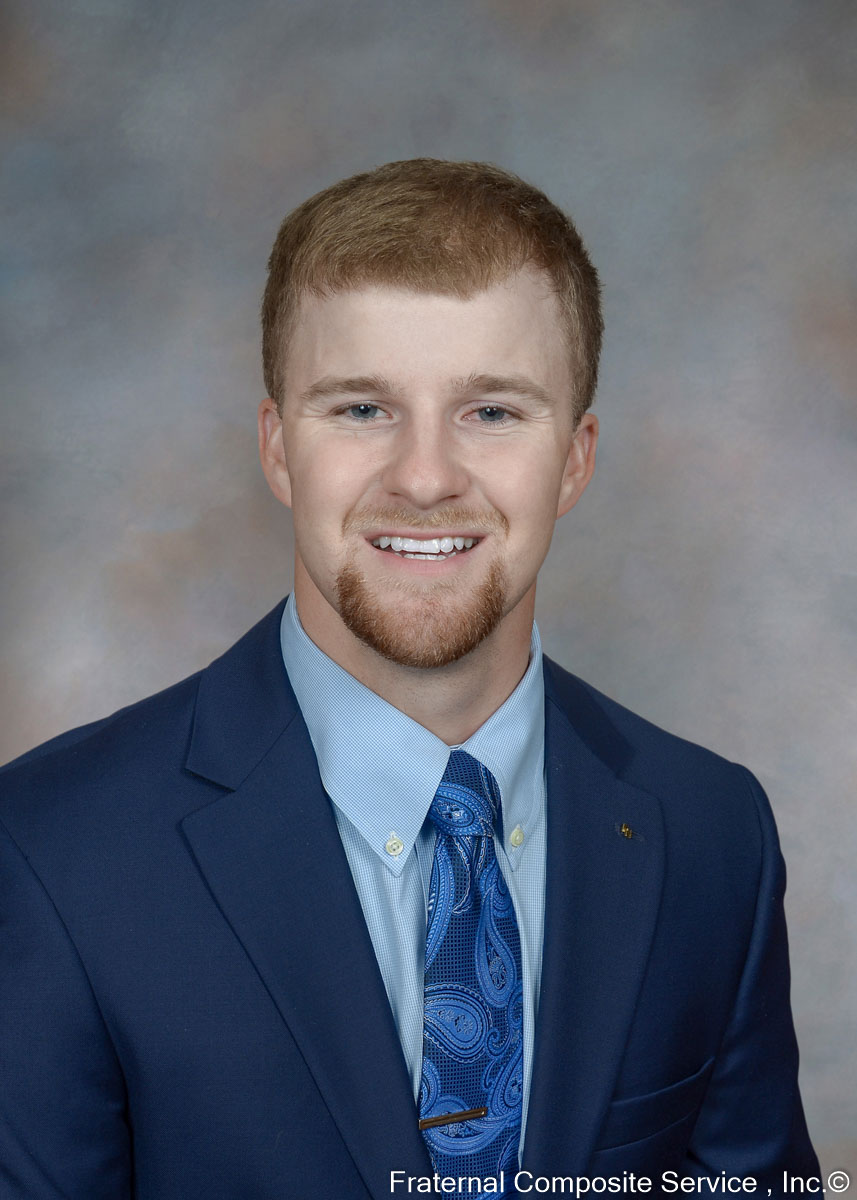
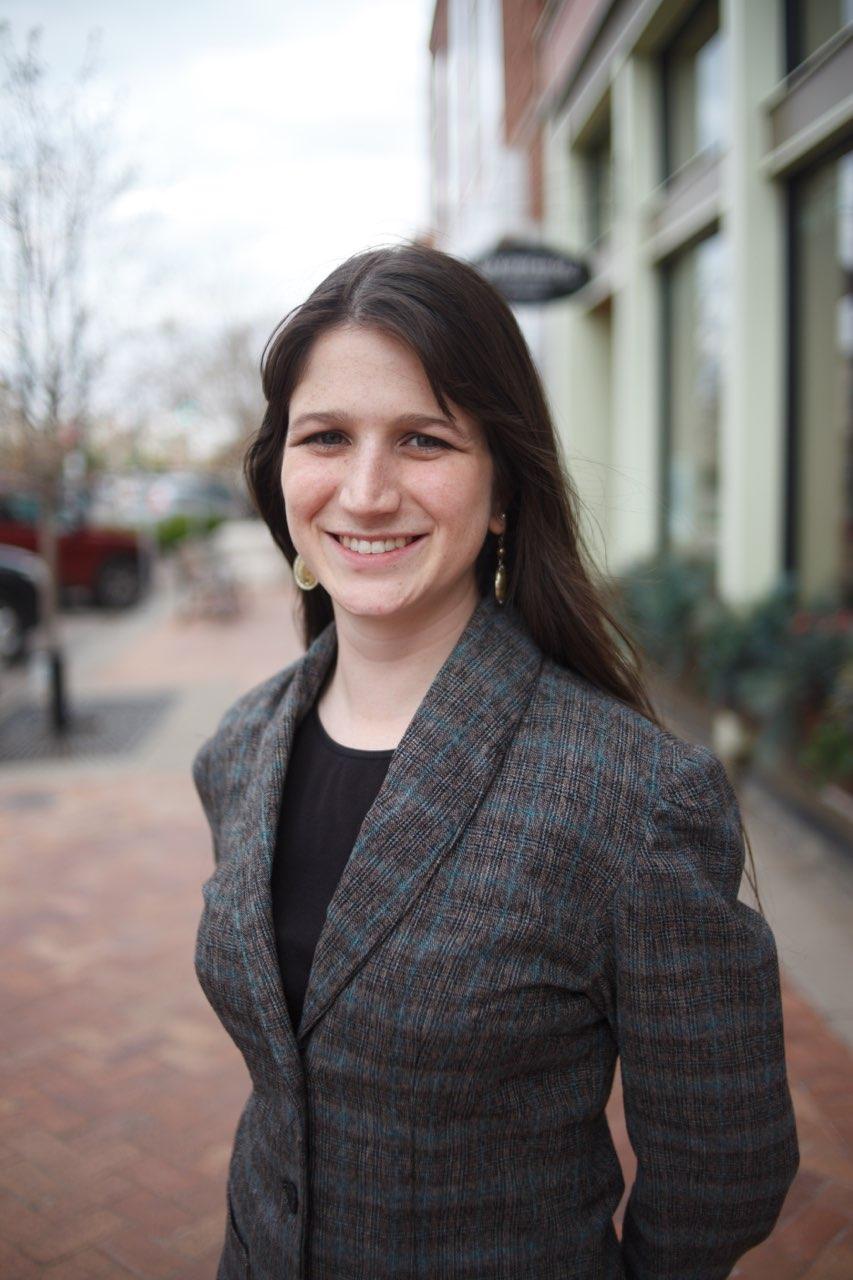
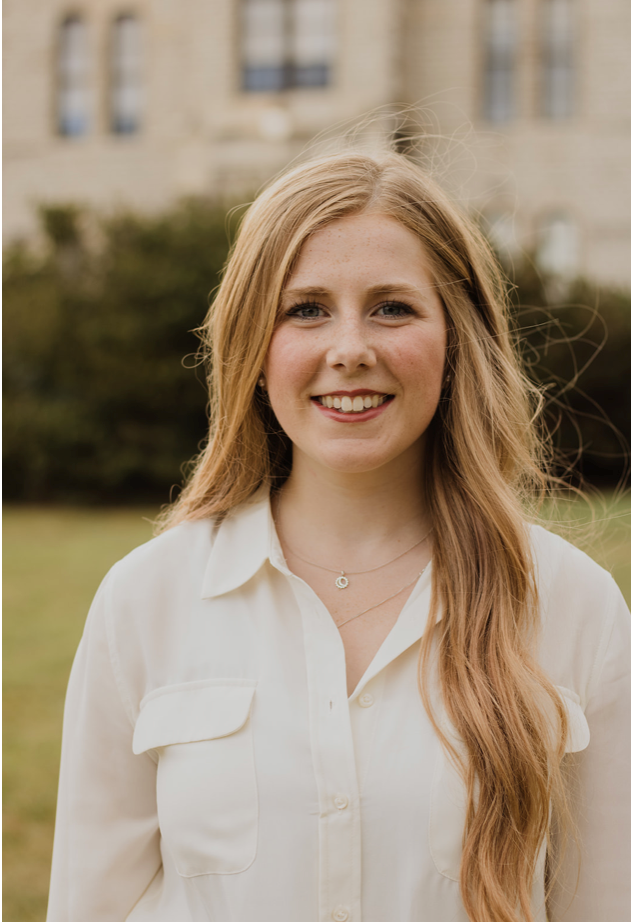
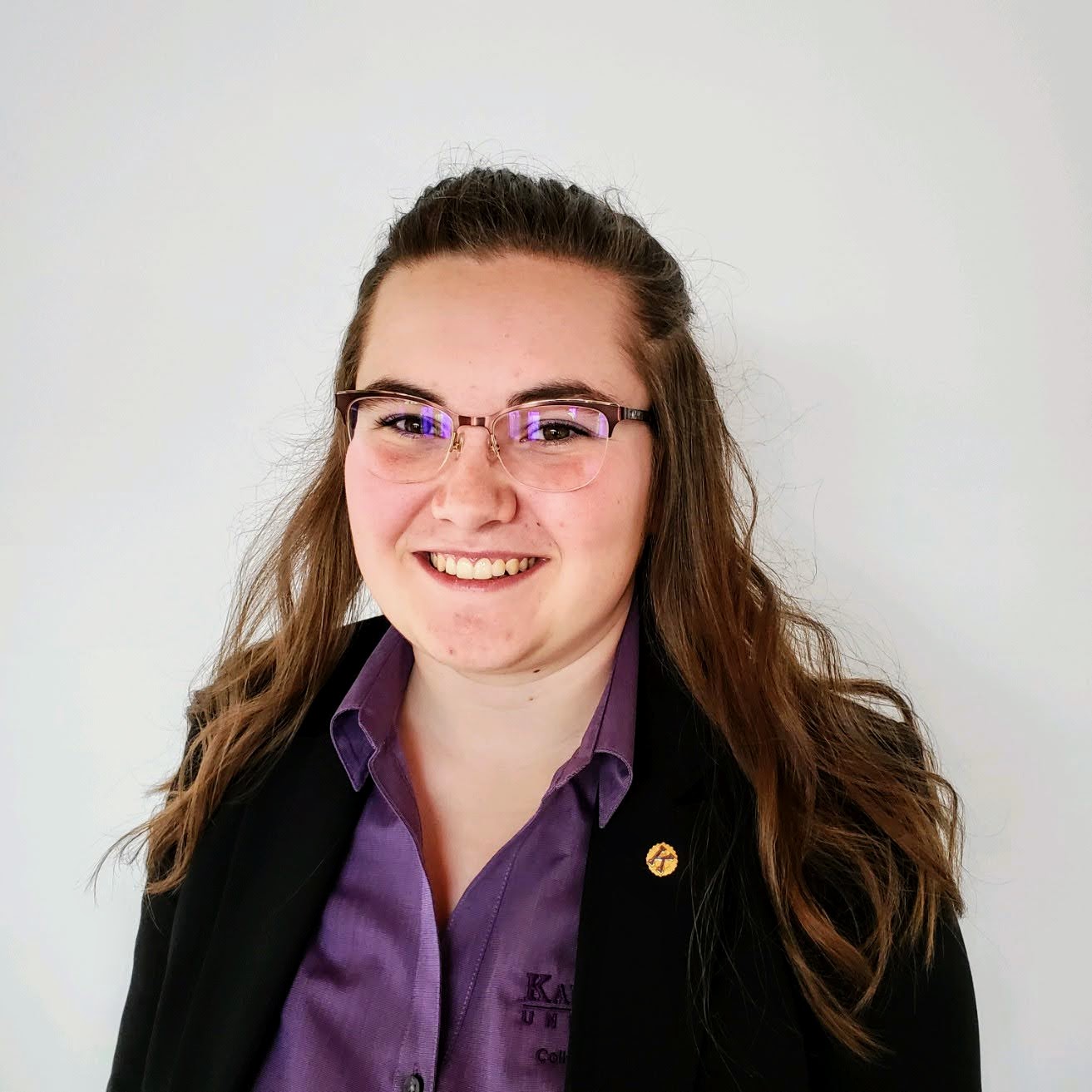
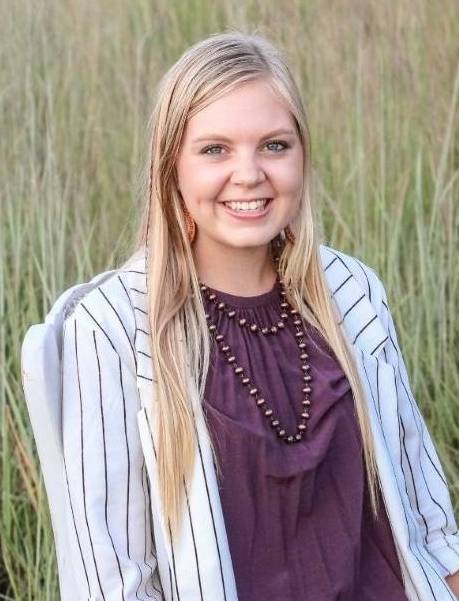
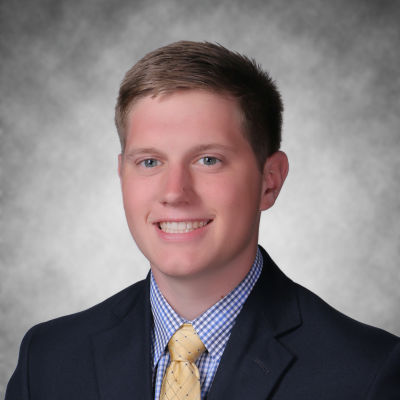
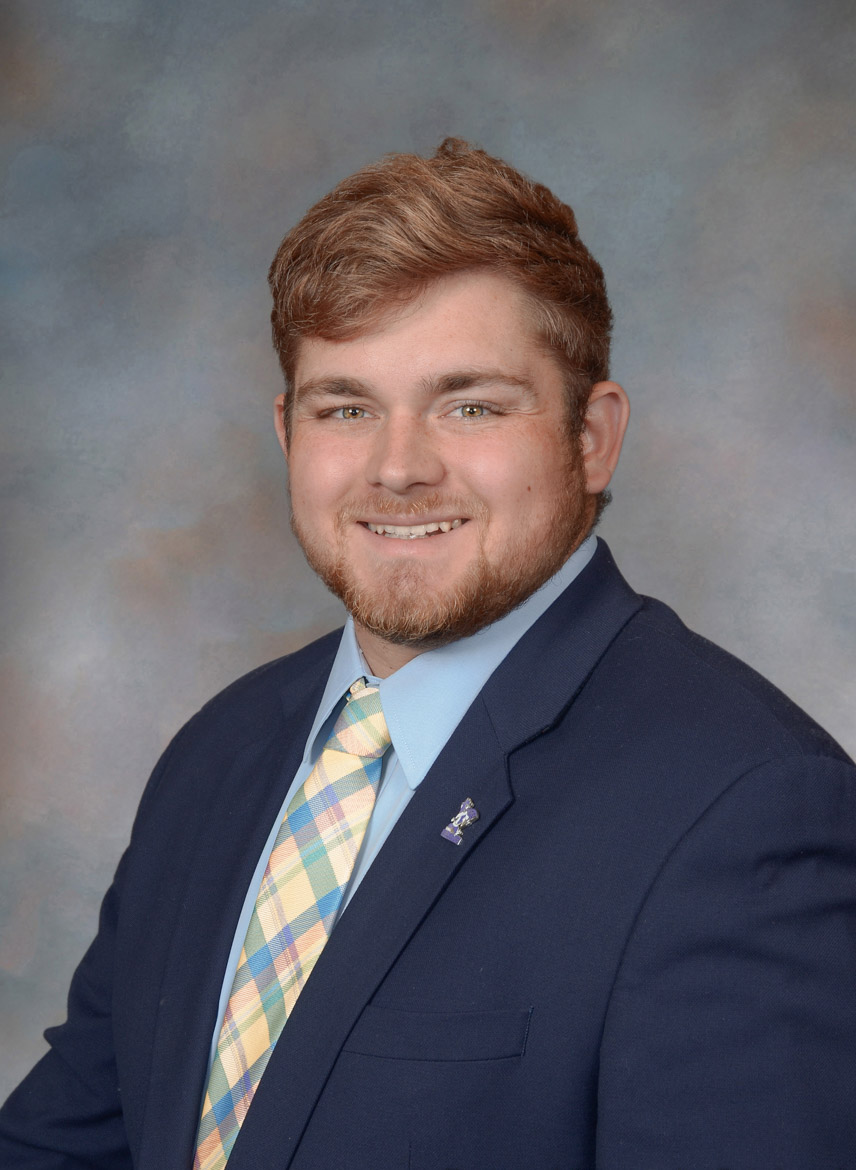
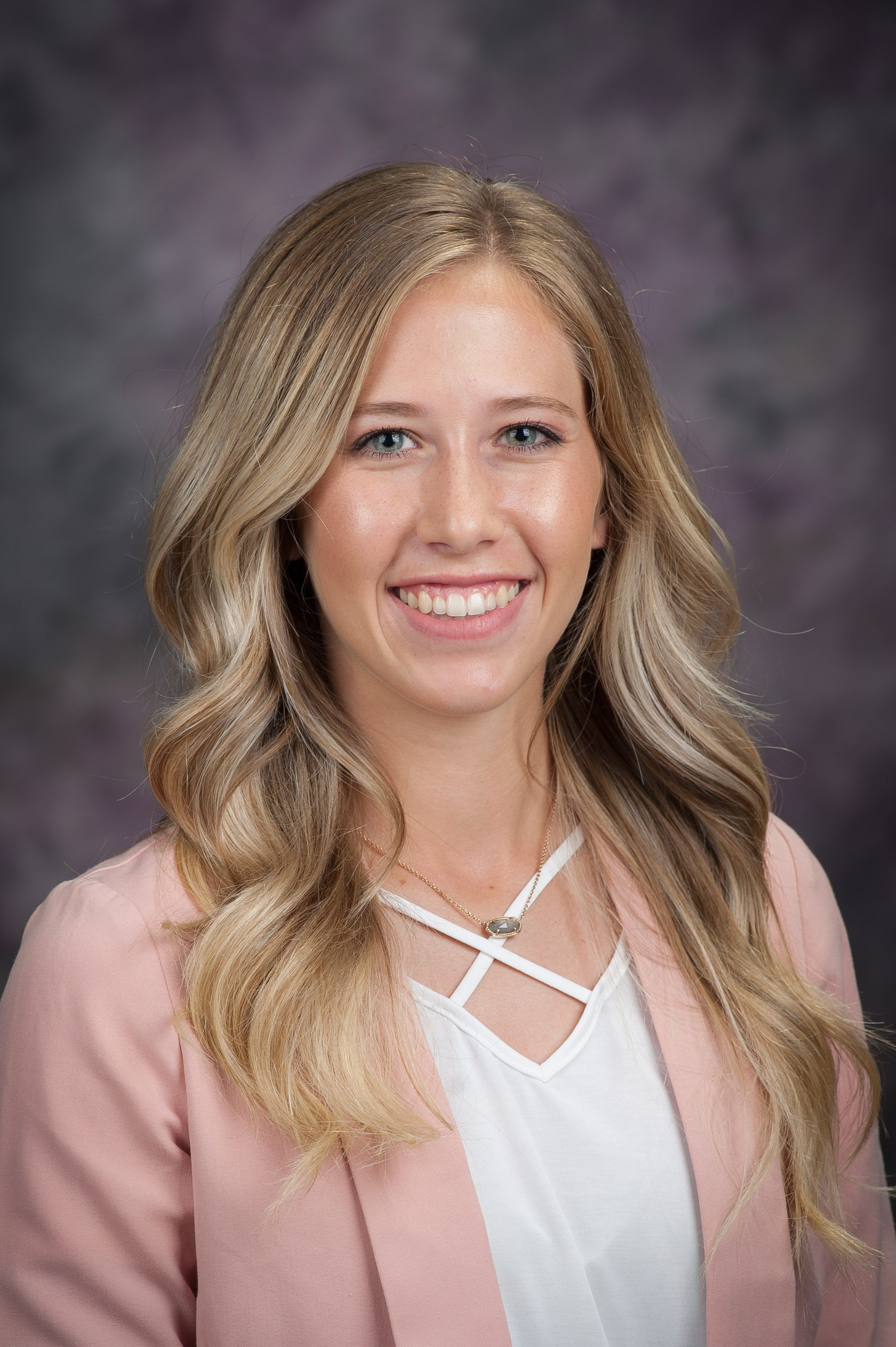
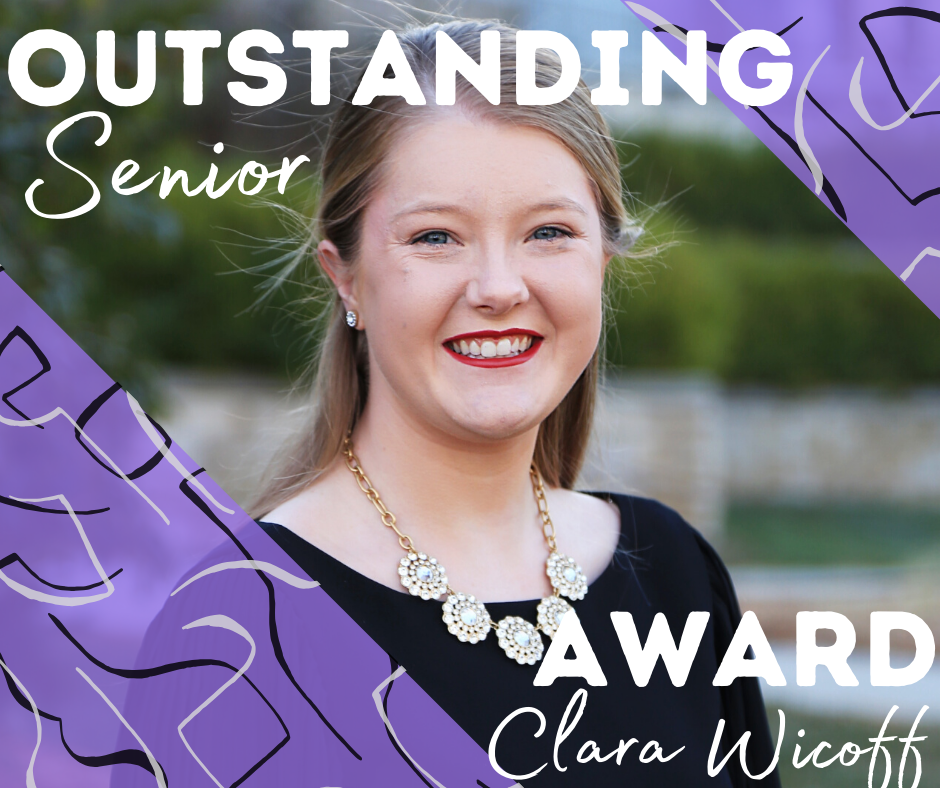
The Agricultural Economics Department has selected four students to receive the Department’s 2025 Outstanding Senior Awards: Adelaide Easter, Lauryn Karr, Paige Vulgamore, and Grace Walenta. The award recognizes seniors in the Agricultural Economics Department for their significant contributions during their time at K-State.

“Each year we recognize several of our most outstanding students. It is always an honor to recognize their accomplishments within the department as well as the University. Each of these four have excelled during their time at K-State. We appreciate the contributions of Adelaide, Lauryn, Paige, and Grace, and wish them the best as they become alumni from the Department of Agricultural Economics!” Dr. Elizabeth Yeager, Professor of Agricultural Economics and Director of Undergraduate Programs, said.
Adelaide Easter, Salina, Kansas, has completed degrees in Agricultural Economics and Global Food Systems Leadership, with minors in Leadership and International Agriculture and a certificate in Nonprofit Leadership. She was named Kansas State University's 39th Truman Scholar for her commitment to public service and addressing challenges in the global food system. Her leadership roles include Director of Stakeholder Relations for Food Security Scholars, Student Coordinator for the Global Food Systems Leadership program, and Director of Leadership Programming for Blue Key Senior Honorary. Easter also served as Basic Needs Director in the Student Governing Association, Co-Chair of the Cats’ Cupboard Advisory Board, and founder of the Student Basic Needs Coalition. She studied abroad in Italy and Kenya and completed internships with Kansas Grain Sorghum, National Sorghum Producers, and U.S. Senator Jerry Moran's office through the Flinchbaugh Food and Agriculture Policy Fellowship. This summer, she will intern with Spur Local in Washington, D.C., through the Truman Foundation Summer Institute, and plans to pursue a career in food and agricultural policy before attending graduate school.
"Studying Agricultural Economics at K-State has deepened my understanding of the global food system and economy and set me up for success in working in the community to make progress on issues like food security and poverty through policy and education,” Easter said.
Lauryn Karr, Gardner, Kansas, studied Agribusiness with a minor in Business. Now residing in Chicago, Karr developed her passion for agriculture through the influence of her grandfather. During her time at Kansas State University, she served as President of the Ag Econ/Ag Business Club, where she enhanced her leadership abilities and built strong connections within the agricultural community. She is known for her enthusiastic approach to learning and her commitment to growth both personally and professionally. After graduation, she will begin her career as a Customer Experience Specialist with Frontier Farm Credit, where she looks forward to making a positive impact in the agriculture industry.
“My time at K-State and in the Agricultural Economics Department has been nothing short of transformative. Here, I found my passion, built a foundation for my future, grew into a leader, and made friendships that will last a lifetime. Being recognized as an Agricultural Economics Outstanding Senior is a true honor and a beautiful reminder of the journey that has shaped who I am," Karr said.
Paige Vulgamore, Scott City, Kansas, majored in Agricultural Economics and Global Food Systems Leadership. At Kansas State University, she has taken on leadership roles through the College of Agriculture and been actively involved in organizations such as the Student Governing Association serving as Student Body President and Student Alumni Board. Vulgamore participated in agricultural study abroad programs that have strengthened her global perspective and leadership skills. She is passionate about agriculture policy and plans to continue her education at Texas A&M University, where she will pursue a master’s degree in Agricultural Economics with a focus on policy.
“I feel so honored to be named an Outstanding Senior alongside several of my incredible peers. This award is truly a reflection of the people who have poured into me here, within the Department of Agricultural Economics and the broader K-State community. The opportunities I've had to learn in the classroom, through campus involvement, and studying abroad, each encouraged by my mentors, have shaped who I am today. I'm so grateful to K-State for challenging me to grow, learn, and lead,” Vulgamore said.
Grace Walenta, Peoria, Illinois, majored in Agricultural Economics and International Agriculture. At K-State, she served as a College of Agriculture Ambassador, a Worship Leader and Ministry Team member with Reformed University Fellowship and participated in two study abroad programs. Walenta was a Fellow with the Risk Management Center. She was recognized as a CropLife Association (MACA) Young Leader Scholar and received the Gamma Sigma Delta Outstanding Performance Award, in addition to earning Semester Honors throughout her college career. Walenta completed a Grain Merchandising Internship with The Andersons, served as an Undergraduate Teaching Assistant, and participated in an English-teaching missions trip to Poland. After graduation, she plans to remain in Manhattan to stay involved with her church and campus ministries while pursuing future opportunities in agriculture.
“I am honored to be recognized as an Agricultural Economics Outstanding Senior. My time as a student in Agricultural Economics at K-State has been rewarding and I am grateful for all of the faculty and staff that influenced me. I look forward to new challenges and opportunities ahead and am excited to make an impact with what I've learned,” Walenta said.
Multiple Agricultural Economics faculty received awards this spring.
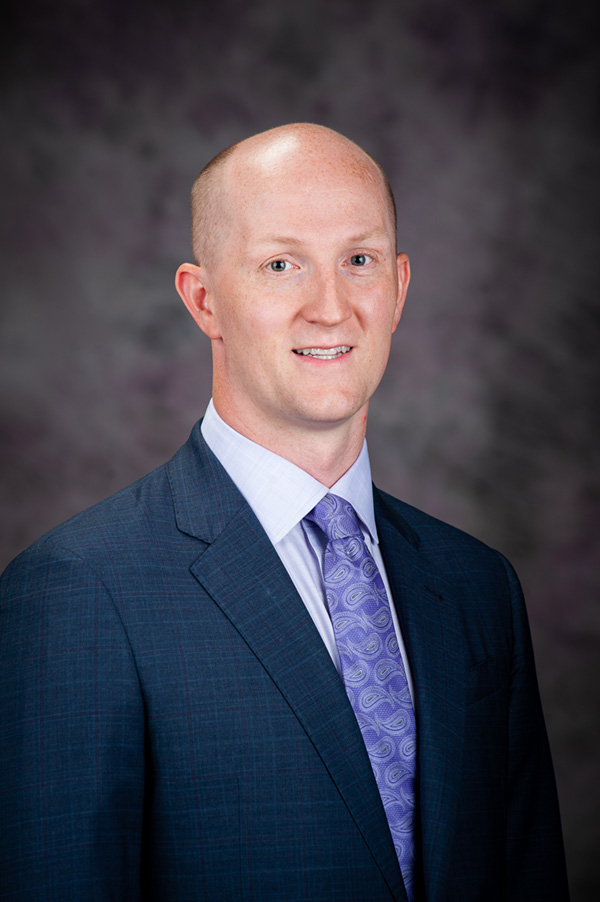
Dr. Logan Britton
The Eta Chapter of Gamma Sigma Delta at Kansas State University held its annual spring reception in April, celebrating significant accomplishments within the agricultural and applied sciences and honoring faculty dedicated to the core values of the land-grant mission – research, teaching, and outreach benefiting the state. Dr. Logan Britton was recognized with the prestigious Early Career Award for his innovative work in agricultural economics and his commitment to student mentorship.
"I’m honored to be recognized with the Early Career Award by K-State’s Gamma Sigma Delta chapter. I’m especially thankful for the students, colleagues, and mentors who have supported me along the way. Their encouragement and collaboration have helped me grow as an economist, researcher, and teacher. I’m proud to be part of a department that values both academic excellence and community," Britton said.
Established in 1914, the Eta Chapter of Gamma Sigma Delta is a faculty-governed honorary society committed to upholding high standards of scholarship, character, and proficiency in agricultural and related sciences. This organization is dedicated to advancing excellence in scholarship, research, and service across the agricultural and applied sciences disciplines.
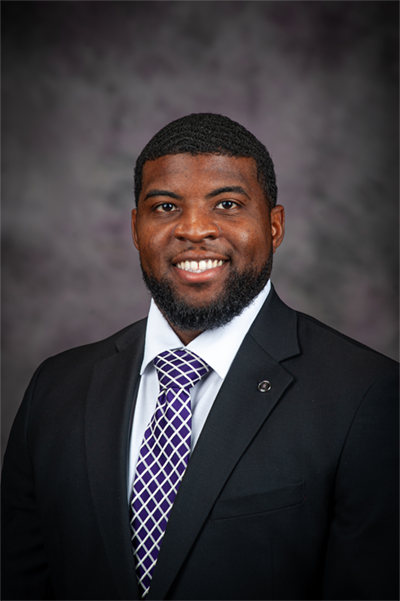
Dr. Lonnie Hobbs
Dr. Lonnie Hobbs recently became a SciComm Identities Project fellow, expanding his expertise in science communication.
“The SciComm Identities Award is a nationally competitive award for young faculty members. It means a great deal to me, as the goal is to improve young professionals' ability to communicate in ways that embrace their unique personality styles,” Hobbs said. “Being selected as one of the few recipients this year is truly an honor.”
Hobbs is an assistant professor in the Department of Agricultural Economics at Kansas State University. He specializes in agribusiness, marketing, pet food economics, teaching and learning, and diversity, equity, inclusion and belonging.
The program is designed to help professors communicate research more effectively, particularly to students. Its primary goal is to enhance the scientific communication skills of tenured and tenure-track faculty by teaching them how to express their work in ways that resonate with their intended audiences.
“It has taught me to identify the most relevant aspects of research for my audience and convey them effectively,” Hobbs said. “I’ve now begun sharing these communication strategies with my research students as well.”
During the program, participants explore intercultural communication theory to test and develop new approaches to science communication—an element that stood out to Hobbs.
“Being a lifelong learner, I was immediately drawn to the opportunity to enhance my communication skills and network with other young professionals in academia. Working in a profession where communication is essential,” Hobbs said, “I recognized this as a valuable chance to develop skills that would benefit not only my students but also my department, college, university and the stakeholders I work with.”
Dr. Hobbs’ participation in the SciComm Identities Project marks an important step in his ongoing journey as both a scholar and educator, equipping him with tools to make science more accessible, inclusive and impactful for the next generation.
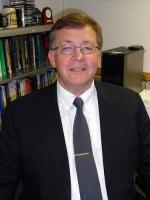
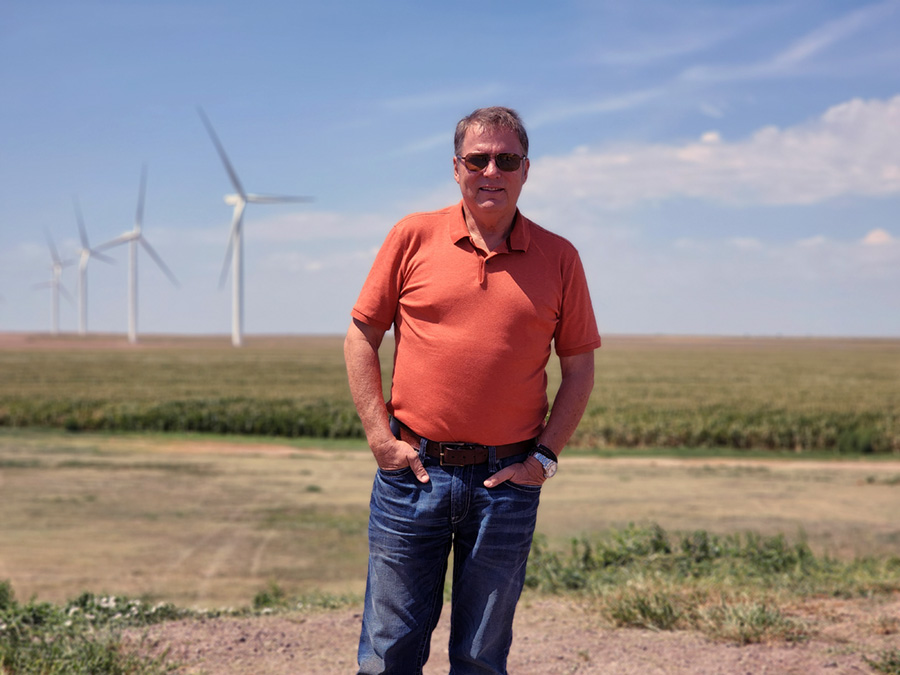
Dr. Dan O'Brien
Dr. Dan O’Brien has recently been awarded the Lincoln Department of Agricultural Economics 2025 Outstanding Alumni Award from the University of Nebraska.
This award brought back many memories and reminded O’Brien of his capabilities in the Agricultural Economics industry.
“This recognition is humbling, as I consider how many very capable and successful people have graduated from UNL Agricultural Economics.” O’Brien said “To be counted among respected graduates of UNL Ag Econ along with other people who have accomplished great things in their careers is something amazing for me to consider.”
O’Brien grew up on a farm near Geneva, Nebraska. He appreciated the environmental and economic forces that came from growing up on a farm. This was his inspiration.
“The best way to describe it is that my way of thinking seemed to fit well into the framework or academic discipline of Agricultural Economics - which provided a framework for understanding the factors impacting farm profitability and survivability,” O’Brien said.
O’Brien pushes students wanting to pursue careers in the field to find satisfaction in applying knowledge to the Agricultural Economics theory. He mentioned the real world issues that affect our world today.
The only thing O’Brien regrets from his career is when he had good ideas in applied research or educational outreach and did not pursue it. His advice to future Agricultural Economics students, “be continuously motivated by your intellectual curiosity in this area of study.“

Thank you to all those you donated to K-State's Day of Giving on April 9, 2025!
The Agricultural Economics Department's National Agri-Marketing Association competition team received $2,450 in donations thanks to your generosity! Your support will help the team compete at the International Food and Agribusiness Management Association (IFAMA) conference in Brazil in June.
Kansas State University’s Master of Agribusiness program is offering its 9th farm and agribusiness tour of Spain and Portugal June 6-18, 2026. Anyone interested in getting a better understanding of this region is encouraged to join us.
Saturday, June 6th: Madrid
Arrive and city sightseeing tour
Sunday, June 7th: Madrid/Toledo
Toledo sightseeing tour
Sheep farm making traditional Manchego cheese.
Monday, June 8th: Madrid/Granada
Windmills and winery
Tuesday, June 9th: Granada
Dairy operation, producing milk, yoghurt and cheese
Alhambra Palace
Wednesday 10th: June Granada/Estepona
Agricultural cooperative
Olive oil mill
Cattle feedlot
Thursday, June 11th: Estepona/Seville
Fighting bull ranche
Royal Andalusian School of Equestrian Art (Spanish Riding School)
Sherry wine producer
Friday, June 12th: Seville
Organic citrus fruits including their famous Seville Oranges
Extra virgin olive oil producer and olive grove
Walking tour of Seville
Flamenco show
Saturday, June 13th: Seville/Evora
Cross the border into Portugal
UNESCO world heritage town of Evora
Sunday, June 14th: Evora/Lisbon
Alentejo pigs, sheep and cork production
Lisbon sightseeing tour
Monday, June 15th: Lisbon
State-run agriculture and forestry company on 20,000 hectares, producing rice, wine and livestock
Afternoon tour of cork oak forestry and management, and cattle
Tuesday, June 16th: Lisbon/Oporto
Visit Fatima
Port Wine Lodge, one of the oldest of the founding Port houses
Wednesday, June 17th: Oporto
Winery tour
Boat trip along the Douro River in Pinhão
Farewell dinner
Thursday, June 18th: Oporto
Depart for airport this morning.
**Itinerary is tentative and may change.
Please contact Mary Sullivan, mjbowen@ksu.edu or 785-532-4435 for more information and full itinerary.
A Kansas State University course is helping students and their families tackle one of agriculture’s most difficult challenges: returning to the farm after college and planning for long-term business succession.
Introduced in 2024, AGEC 450: Returning to the Farm, equips students with tools to analyze farm finances, develop business plans and navigate generational transitions in family-owned operations.
Developed by Robin Reid, Ashlee Westerhold and Richard Llewelyn in the Department of Agricultural Economics, the course is designed for students who are planning to rejoin their family’s farming or ranching business. Coursework includes enterprise budgeting, estate and transition planning, and analysis of business structures and tax implications.
“Returning home to the farm is more than just going back to work—it’s about ensuring the long-term viability of a business and maintaining strong family relationships,” said Westerhold, Director of the Office of Farm and Ranch Transition.
A cornerstone of the course is the “family in-service weekend,” held early in the semester. Students invite family members or business partners to campus for a weekend of workshops and facilitated discussions. This year, 22 students and more than 80 guests attended.
The event includes presentations by legal and financial experts such as Mark Dikeman, executive director of the Kansas Farm Management Association, and Roger McEowen, a Washburn University professor specializing in agricultural and tax law.
Topics include estate planning, business entity structures, and intergenerational fairness—particularly how to bring one child back into the operation while remaining equitable to others who may not be involved.
“The weekend is designed to spark open and honest conversations,” Westerhold said. “We want families to talk about their expectations, concerns and hopes for the future.”
According to post-event surveys, 100% of respondents rated the in-service as “valuable” or “very valuable.” Many noted increased clarity around the return process and greater confidence in managing family and business transitions.
One former student, Garrett Korte, said the course helped him and his family prepare for his return to their seventh-generation operation. Korte now manages a small square bale business and rents row crop acreage while working alongside his father and uncle on the family’s 10,000-acre farm.
“We knew I couldn’t just come back and be a ‘yes man,’” Korte said. “Dad wanted me to succeed, and I didn’t want to fail. That meant we needed a plan.”
Korte credited the course and the K-State Office of Farm and Ranch Transitioning for helping his family work through tough conversations.
“They make it easier because they start the conversations a lot of people are scared to have,” Korte said. “You realize you’re not the only one figuring this out.”
Westerhold said stories like Korte’s show the importance of offering practical, real-world education for students in agriculture.
“If a family can freely and openly communicate about their goals for the future of the farm, they have a much better chance of succeeding,” Westerhold said. “This class is about helping make that happen.”
The course and in-service weekend will continue as a regular part of the K-State agricultural economics curriculum.
Spring 2023 enewsletter
We have completed the academic year and are gearing up for the Fall of 2023. You'll find information on the numerous awards received by our students, faculty and staff over the last year.
Featured in this newsletter are articles on:
- 2023 Outstanding Seniors
- 2022 Distinguished Alum Lon Frahm
- New faculty in the Agricultural Economics Department
- Dr. Nelson Villoria received a Fulbright Scholar Award
- 2022-23 Scholarship Awards
- Three graduate students named Farm Foundation Ag Scholars
- The Evolving Kansas Farmer Cooperative Landscape
- Dr. Antonina Broyaka's journey from the Ukraine to the U.S.
- Calendar of upcoming events
In the fall we will honor a new distinguished alumni member at our annual scholarship and awards banquet. We hope you will join us for the scholarship banquet Friday, September 22 and at the tailgate event before the September 23 football game against new Big 12 member University of Central Florida. Be watching for more information on both events.
Our achievements are directly related to the continued support of our alumni and corporate sponsorships. We appreciate the dedication and engagement of our alumni and outside supporters. Thank you to our generous donors who give back to the Department. If you have an interest in giving before the end of the year, please contact me about departmental needs or go to our Give Back page to contribute.
Please take time to learn more about the activities of our department. We also encourage you to share your career and family developments so we can keep your fellow alumni informed. Please email me at afeather@ksu.edu or Mary Sullivan, our communications coordinator, at mjbowen@ksu.edu with information you would like to share with your fellow alumni.
Go Cats!
Dr. Allen Featherstone
Department Head, Professor, Master of Agribusiness Program Director, University Distinguished Professor
The Agricultural Economics Department has selected four students to receive the Department’s 2023 Outstanding Senior Award: Hannah Ballard, Ashley Hartman, Jenae Tilford, and Parker Vulgamore. The award recognizes seniors in the Agricultural Economics Department for their significant contributions during their time at K-State.
“The Department of Agricultural Economics is proud to select four students as our outstanding seniors for 2023. These students have all represented our Department, College, or University through various capacities and have been a joy to work with during their time at KSU. We are proud of their academic accomplishments as well as their leadership skills and are excited to continue to watch them succeed as alumni of our program!” Dr. Elizabeth Yeager, Associate Professor of Agricultural Economics and Director of Undergraduate Programs, said.
The following students were recipients of Agricultural Economics Outstanding Senior Award:
Hannah Ballard, Madison, Kansas, graduated from the department in Agribusiness in December. During her time at K-State, Ballard served as the President of Alpha of Clovia 4-H Cooperative Leadership house, was an active member in the Agricultural Economics Club, Alpha Zeta, Kansas Corn Collegiate Academy, and a team member of the International Food and Agribusiness Marketing Association, who won the 2022 international championship in Costa Rica. Additionally, Ballard was honored as the College of Agriculture Student of the Month. She gained valuable work experience as a student worker for the Agricultural Economics department, where she had the opportunity to travel to the World Ag Expo in California to recruit students for the College of Agriculture. Ballard now lives and works in Baldwin City, Kansas for Frontier Farm Credit as an Insurance Services Officer.
“I am honored to receive the outstanding senior award. My time in the Agricultural Economics Department at Kansas State is something I will look back on for many years to come. I will forever be grateful for all the special connections I made with faculty, staff, and students. K-State has some of the best and I am so proud to be an Ag Econ K-State Alum!” Ballard said.
Ashley Hartman, Waterloo, Illinois, grew up in Waterloo, IL on her family’s grain farm. She graduated in May with a bachelor’s degree in Agricultural Economics with a specialty in Marketing and minor in Animal Science. Throughout her time at K-State, Hartman was involved in many organizations. She was part of the Sigma Alpha Professional Agricultural Sorority, College of Ag Ambassadors, NAMA team, Dairy Science Club, and Gamma Sigma Delta. Hartman has held many leadership roles such as President and Secretary of Dairy Science Club, Secretary and Treasurer of Sigma Alpha, Director of Involvement in Ag Ambassadors, and Dairy Chairman for Little American Royal. Academically, she maintained a 4.0 GPA throughout her four years at K-State. Hartman gained various work experience from working on her family’s farm to working at the USDA as an office assistant to interning for John Deere with the Baling and Mowing Marketing team. Back home, she is part of the Monroe County Farm Bureau Young Leaders and Waterloo FFA Alumni. After graduation, Hartman will join the John Deere Marketing Development Program.
“I am honored to be named an Outstanding Senior for the Department of Agricultural Economics. I have greatly enjoyed my time at K-State and this is largely due to their classes and faculty that have helped me grow over the last four years,” Hartman said.
Jenae Tilford, Roca, Nebraska, decided to come to K-State because of the great agricultural programs and the welcoming family atmosphere. She majored in Agricultural Economics and Global Food Systems Leadership. Throughout her undergraduate degree Tilford was involved in Pre-Law Ambassadors, Economics Club, Kappa Alpha Theta, Gamma Sigma Delta, and Hands-on K-State. In the summer Tilford will be interning with the Kansas Department of Agriculture in their Water Resources Division. In the fall, we will start her master’s in agriculture economics at K-State.
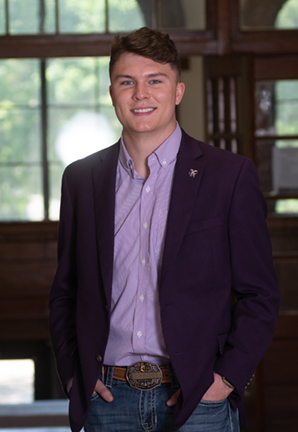
"I'm very honored and grateful to have been selected for this award and to receive it in such great company. It means a lot to me to have had the support of the Agricultural Economics Department for the past four years,” Tilford said.
Parker Vulgamore, Scott City, Kansas, studied agricultural economics with a pre-law specialty. On campus, he served as the Student Body President of Kansas State, was a member and the former chapter president of the Delta Upsilon Fraternity and served as a Pre-Law Ambassador. He is also a member of the Delta Upsilon International Fraternity board of directors. Vulgamore is the third generation of his family to study agriculture at Kansas State, and he is the fifth generation to grow up living and working on his family's farm in Scott City, Kansas. After graduation, he plans to pursue a master's in agricultural economics at Kansas State.
"I'm truly honored and humbled to be recognized with this award from the people who have made my undergraduate experience truly outstanding. I owe a huge debt of gratitude to the Department of Agricultural Economics for the crucial support and exceptional education that has enabled my success and inspired my dreams. The academic advising, connections in industry, and legacy of outstanding students in the department are second to none,” Vulgamore said.
The Department of Agricultural Economics selected Lon Frahm as the 2022 Distinguished Alum. The award is given annually to an alum who has demonstrated significant professional achievement related to agricultural economics or agribusiness.
“It is quite an honor to be invited back to speak to students and faculty as part of the Distinguished Alumni program. I am grateful for the opportunity,” Frahm said.
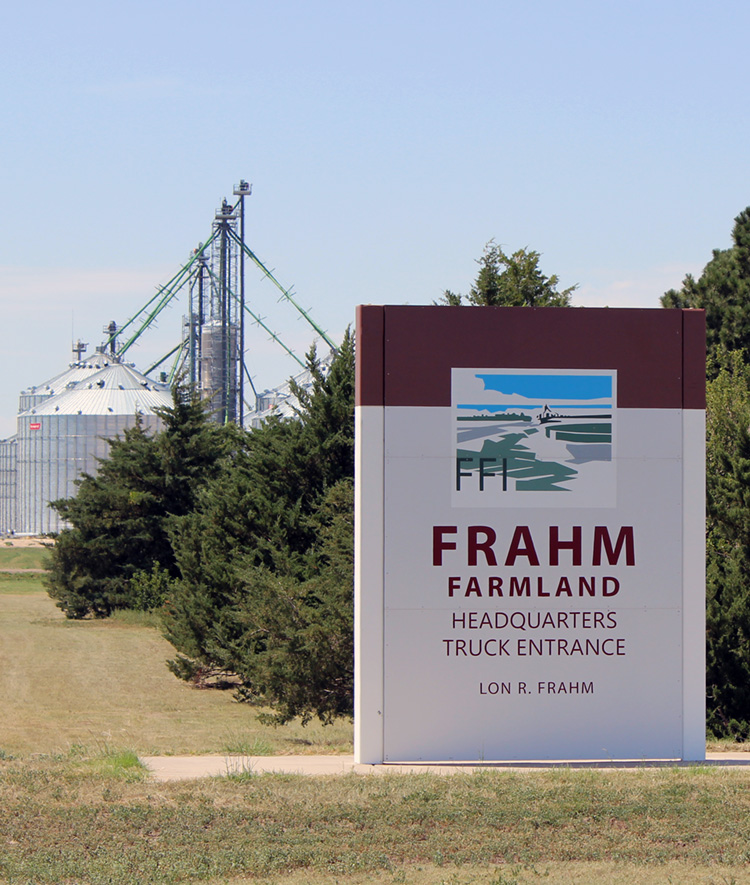
As the driving force behind Frahm Farmland, Inc., he is the 6th generation to farm in Thomas County, KS. Frahm has been at the helm of Frahm Farmland, Inc. since 1986 when his father’s sudden death launched the then-28-year-old into the farm’s lead role. Since then, Frahm has grown the operation from 5,000 acres to more than 30,000 and continues to look for opportunities to enhance the business.
Frahm completed his bachelor’s degrees in business administration and agricultural economics and later his Master of Agribusiness (MAB), all from Kansas State University.
“I’d been out of school for 20 years when I went back to the master’s program. The MAB program helped me figure out what was a big risk and what wasn’t. Those tools helped us make wise decisions about what risks we should take.
“During the program, I learned Word and Excel. The crew all learned it along with me. Today, the farm runs on Excel,” Frahm said. “Education is one of the best investments of your time and dollars. Lifelong learning is part of my mission and vision.”
He has also taken part in numerous professional educational programs, including Kansas Ag and Rural Leadership, Leadership Kansas and The Executive Program for Agricultural Producers with Texas A&M University, and Harvard Agribusiness Seminar. A particular high point in Frahm’s career came in 2009 when he was named Farm Journal’s Top Producer of the Year. He has since been invited to a variety of educational and business venues to speak on farm management and other areas of expertise.
While the vast majority of Frahm’s time and energy is spent managing the business and marketing aspects of the farm, he does find time to pursue his other passions, including landscaping, music, cars, boats, motorcycles, architecture, books and reading, international travel and aviation. He also places great importance on local community development and he has served on a variety of boards and committees, including High Plains Public Radio, the Thomas County Historical Society, Groundwater Management District #4 and the Citizens Medical Center, among others.
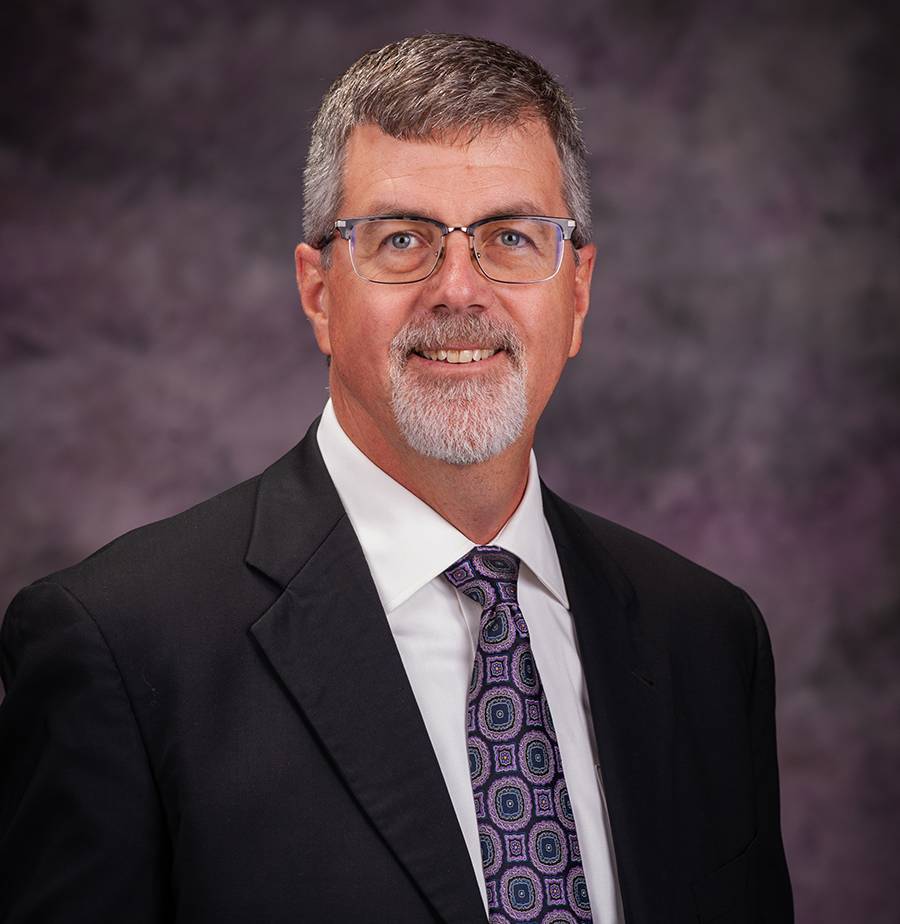
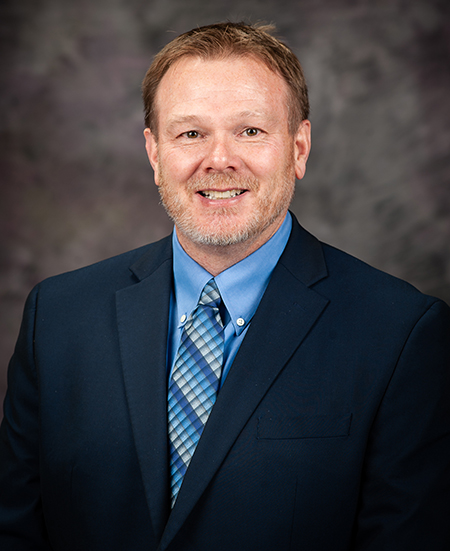
Aaron Johnson joined the Department of Agricultural Economics in the fall of 2022 as an associate professor. His areas of focus are entrepreneurial skills, sales and sales management, strategic management, and marketing and marketing management. Johnson conducts research in the areas of new venture creation, business management, strategic management and strategic marketing. Currently, he teaches Small Business Operations, Food and Agribusiness Management, and Food and Agribusiness Management Strategy. A major priority of his is to develop future professionals who can deliver value to whatever endeavor they pursue. In doing so, he values industry engagement both in consulting roles and through connecting industry and students. Prior to joining Kansas State University, Johnson was at the University of Idaho conducting research and teaching agribusiness management students for fifteen years. Prior to that, he was the Food Business Strategy Specialist at Oregon State University’s Food Innovation Center in downtown Portland, where he worked with hundreds of food business startups. Dr. Johnson received his Ph.D. in Agricultural Economics from Purdue University.
Joe Parcell joined the Department of Agricultural Economics in this spring as a professor and Director of the Center for Risk Management Education and Research. His focus is on risk management and policy solutions leading to strategic opportunities for businesses and individuals to be innovative, resilient, and profitable. Recognizing that no solution is found in isolation, Parcell’s approach is to use systems design in modeling decision processes. This allows for robust solutions to agency-level questions. He teaches AGEC 751 Risk Management Fellows Seminar. Parcell received his bachelor’s degree in mathematics from the University of Northern Iowa, and he earned his master’s and doctoral degree from Kansas State University. Prior to returning to K-State, he served as Division Director of the Applied Social Sciences division from 2017-2022 at the University of Missouri. He is a dedicated leader, teacher, mentor, and researcher with over 25 years of academic and consulting experience.
Three K-State Agricultural Economics graduate students were named Agricultural Scholars by the Farm Foundation, an accelerator of practical solutions for agriculture. Nominated by their college dean or department head, up to 15 applied or agricultural economics students are selected for this exclusive program, with at least five to be chosen from 1890 land-grant institutions. Micah Cameron-Harp, Ph.D. graduate; Ashling Murphy, master’s degree graduate; and Amber Oerly, master’s degree graduate, were selected for the 2022 program.
The Ag Scholars program seeks to actively engage graduate students working in agricultural economics or related agricultural policy work with a year-long series of learning experiences, focused on gaining a deeper understanding of production agriculture, agribusiness, and government, in hopes of inspiring and training the next generation of agricultural economists interested agricultural policy, commodity market analysis, agricultural finance, and other applied fields of economics. This annual program is sponsored in partnership with the U.S. Department of Agriculture’s (USDA) Economic Research Service (ERS).
“The Agricultural Scholars Fellowship Program with the Farm Foundation has provided me with a unique and inspiring experience. Not only has the program allowed me to do professional networking with industry leaders and peers in other graduate school across the country, it has also allowed me to further develop my technical skills in agricultural economics through engagement with USDA ERS economists and staff,” Oerly said. “The program is intentionally focused on preparing future agricultural economists, and I am so grateful for the opportunity to be involved in with their group!”
Events and projects conducted throughout the year include a mentorship with an ERS senior analyst, a research project and ag-focused forums and meetings, such as a World Agricultural Supply and Demand Estimates (WASDE) “lock-up” session and Farm Foundation Round Table meetings. Scholars also meet with and learn from senior executives with agribusinesses and local trade associations.
“One week before the Farm Foundation’s June Round Table meeting, I was in Florida for the Association of Environmental and Resource Economists’ (AERE) annual meeting. Looking back, I think those two weeks at AERE and the Round Table are a perfect example of the incredible opportunities afforded by the Farm Foundation’s Agricultural Scholars program. The Farm Foundation continually supports the academic efforts and research pursuits of the Scholars, while also giving us opportunities to network with stakeholders throughout the agricultural sector,” Cameron-Harp said.
When Cameron-Harp was notified the paper he submitted was selected for the summer AERE summer conference, the Farm Foundation sponsored his trip to Miami so he could present the paper. From that experience he gained more than a trip; he was able to present his paper and receive feedback.
“The paper I presented there is co-authored with my thesis advisor, Dr. Nathan Hendricks, and it’s titled: ‘Dynamic effects of irrigation technology: When increasing irrigation efficiency reduces groundwater use.’ In our paper, we investigate whether improvements in irrigation efficiency reduced irrigators’ groundwater withdrawals in Kansas, and we find markedly different changes in groundwater use over time depending on the type of technology adopted,” he said.
“As our paper was part of a session on water resources, the feedback and discussion we had afterwards was fantastic. To then have water be one of the main topics at the Round Table meeting just one week later was too good to be true,” Cameron-Harp said. “At the Round Table meeting, I had the chance to discuss the very same results with producers and providers of irrigation technology. As I saw the challenges they face in maintaining, installing, and operating irrigation systems, it helped me contextualize my research and understand my results in new ways.”
Since 2016, the Kansas farmer cooperative landscape has changed significantly. Cooperatives have merged, acquired new businesses, formed LLCs and invested in infrastructure to continue to add value to their farmer-owners. In 2016, there were 81 local, farmer cooperatives with a Kansas-based headquarter location. Today, there are 61. While there are fewer Kansas farmer cooperatives today, the presence of the cooperative system remains strong in Kansas.
An illustration of this evolving landscape is tracked through a cooperative mapping project conducted by the Arthur Capper Cooperative Center (ACCC). The first map, created in 2016 and the most recent map are shown above. In each map, the large purple dot represents the cooperative’s headquarters or where the senior management are located. The small purple dot represents a grain location connected to the cooperative. Lines are drawn between the headquarter and the grain location to create a ‘starburst’ effect, which shows the significant coverage of cooperative grain locations across Kansas. In fact, nearly 50 percent of all grain storage capacity in Kansas is connected to a farmer cooperative.
Why are there fewer co-ops today? While there are multiple reasons for consolidation, such as a manager retiring or access to new markets, the most important reason for consolidation resides in the cooperative principle of local control. A farmer cooperative board of directors is comprised of elected members who work with the CEO or General Manager to ensure the cooperative provides value to their farmer-owners. If the board sees value in merging, they might bring it to a membership vote. If merging is not the best path, the board will continue to work to create value for their membership. Local control is what gives cooperatives the ability to do what is best for their farmer-owners.
The farmer cooperative system in Kansas will likely continue to evolve. Cooperative boards of directors need to be aware of this evolution. The ACCC’s mapping project is a piece of information for directors to use to ensure their own cooperative meets the needs of their farmer-owners.
Life in Ukraine changed dramatically when Russia invaded on February 24, 2022. Millions of people have been displaced from their homes, and thousands have been killed. The country's infrastructure has been severely damaged, and the economy has been devastated. For Dr. Antonina Broyaka, it meant leaving her home with her children and moving to the United States so they would be safe.
After the invasion began, she and her husband, Volodymyr Lapshov, made the decision that she should leave the country with their children, 15-year-old Oleksandra (Sasha) and 9-year-old Maksym (Max). Broyaka and their children first moved to Poland. Lapshov could not leave with his family in case he was needed to fight with the military.
“Our friends in Poland were so kind, but I knew I needed to put as much distance as possible between my children and the Russians,” Broyaka said. “I am convinced the Russians will try to advance beyond the Ukrainian borders.” She hopes the war will end soon but she and her children plan to stay in Manhattan for the foreseeable future.
Broyaka had previously been at K-State as a Ukrainian Fulbright scholar so was familiar with the area and had friends in Manhattan.
“I had been to Kansas State University with the Fulbright Junior Faculty Development Program, so a lot of things are familiar to me here. I spent the 2004-2005 academic year in the Agricultural Economics Department. I had built professional connections, and I made many friends at K-State University, who support me and are helping me adjust,” she said.
“It is not easy to adjust when you move from one continent to another especially under such circumstances. But despite many differences there are a lot of similarities. Both Ukraine and Kansas are great agricultural producers of wheat, corn, sunflower and other crops. When you are in the countryside and looking over wheat fields in Kansas, it feels like I am in Ukraine.”
Before leaving her country, she served as dean of the faculty of Economics and Entrepreneurship at the Vinnytsia National Agrarian University in Vinnytsia, Ukraine. She is an expert on the Ukraine agricultural economy, which she has closely followed since Russia’s invasion. Since coming to Manhattan in March 2022, she has been giving seminars to students, faculty, and the public on the global impact of the invasion at K-State and U.S. Grains Council meetings.
“I try to explain how the Russian invasion has impacted global food production and created food insecurity,” she said. “Ukraine is a major exporter of wheat, corn, and sunflower oil, and the disruption of its exports has led to higher prices for these commodities. This has made it more difficult for people around the world to afford food, and it has raised concerns about global food security.”
Broyaka said it is important for people involved in all levels of agriculture to understand the crisis so they know what they can do to develop a clear plan and stabilize global food supplies. Africa, she said, is particularly at risk with food insecurity. The Russian strategy has been to close Ukraine ports and outlets needed to export commodities. Russian President Vladimir Putin wants to expand and one of his weapons in the war is controlling the food supply. That strategy should concern the entire global community.
“People around the world, need understand that impact of Russian invasion to Ukraine is global. It leads to a repatriation of the share of grain market players, the formation of new supply chains, and changes in the pricing mechanism. It leads to the creation of new political and economic world order and using food as a weapon,” Broyaka said.
Broyaka believes her country, which over the past 20 years has helped feed the world, will rebound following Russia’s invasion but adds it is going to take time.
“I am proud to be a part of K-State and I appreciate all of the support that I have received from colleagues here,” she said. “I believe combining our efforts in solving the economic problems that Ukrainian agriculture is facing will help minimize the negative impact of Russian military aggression on a world food supply.”
You can view some Broyaka's presentations/updates on the AgManager.info website.
Spring 2022 enewsletter
We are coming to the end of a great spring semester and looking to finish the semester strong. We continue to celebrate the successes and activities of our students, faculty and staff.
We were excited to learn Parker Vulgamore, junior in agricultural economics, was elected to be the next K-State Student Body President. Parker is in great company. He is the 22nd student from agricultural economics to be elected to serve as Student Body President and Vice President in the last 80 years!
Featured in this newsletter are articles on:
- 2022 Outstanding Seniors
- Alum and former Chief Agricultural Negotiator in the Office of the U.S. Trade Representative Gregg Doug visits Center for Risk Management Education and Research Student Fellows
- The Office of Farm and Ranch Transition is launched and a new director hired
- Dr. Andy Barkley authored an inspirational book for educators;
- Dr. Jennifer Ifft releases series on risk management strategies for cow-calf producers
- The Arthur Capper Cooperative Center (ACCC) celebrated the 100th anniversary of the Capper-Volstead Act
- Calendar of upcoming events
In September, we will honor a new distinguished alumni member to recognize at our annual scholarship and awards banquet. We hope you will join us for the scholarship banquet Friday, September 30 and at the tailgate event before the October 1st football game against Texas Tech. Be watching for more information on both events.
Our achievements are directly related to the continued support of our alumni and corporate sponsorships. We appreciate the dedication and engagement of our alumni and outside supporters. Thank you to our generous donors who give back to the Department. If you have an interest in giving before the end of the year, please contact me about departmental needs or go to our Give Back page to contribute.
Please take time to learn more about the activities of our department. We also encourage you to share your career and family developments so we can keep your fellow alumni informed. Please email me at afeather@ksu.edu or Mary Bowen, our communications coordinator, at mjbowen@ksu.edu with information you would like to share with your fellow alumni.
Go Cats!
Dr. Allen Featherstone
Department Head, Professor, Master of Agribusiness Program Director
The Agricultural Economics Department has selected four students to receive the Department’s 2022 Outstanding Senior Award. The award recognizes seniors in the Agricultural Economics Department for their significant contributions during their time at K-State.
“It is an honor to recognize four exceptional seniors from our department this year. Each of these students have excelled in the classroom and served their communities and our department well,” Dr. Elizabeth Yeager, Associate Professor of Agricultural Economics and Director of Undergraduate Programs, said. “We appreciate all of their contributions and wish them the best as they become alumni from the Department of Agricultural Economics.”
The following students were recipients of Agricultural Economics Outstanding Senior Award:
Walker Clawson, Meade, Kansas, is completing his Bachelor of Science in Agriculture, majoring in Agricultural Economics as well as Animal Sciences and Industry, with a minor in Business. During Walker’s time at K-State, he has been a member of FarmHouse Fraternity, College of Agriculture Ambassadors, Ag Council, the National Agri-Marketing Association team, and the 2021 Meat Judging Team. Walker is also a student fellow with the Center for Risk Management Education and Research. He has interned with 21st Century Equipment in Alliance, Nebraska and with Desert Ranch on their Rex Ranch location near Lisco, Nebraska. After getting married following graduation, Walker will begin work with Schiff Farms, Inc. near Minatare, Nebraska. Walker will work and rotate through the farm, ranch, and feedlots, learning all aspects of the operation.
“I’m honored and humbled to have been chosen as one of the Outstanding Seniors in the Department of Agricultural Economics. I’m thankful for the staff and students that made my Ag Econ experience at KSU full of growth and life-long connections. The future of K-State Ag Econ is great and I’m excited to use the knowledge and relationships I’ve gained in my future career,” Clawson said.
Reagan Hoskin, Pittsfield, Illinois, is completing her bachelor’s degree in Agribusiness. Hoskin is a transfer student from John Wood Community College. During her time at K-State, she has been involved in the Agricultural Economics/Agribusiness Club, Pre-Law, the Swing and Salsa Club, and competed with the National Agri-Marketing Association marketing team and sales team. For the past two semesters, Reagan has worked as the teaching assistant for production economics taught by Dr. Brian Coffey. In 2019, Reagan completed a seed sales internship for AgriGold and following graduation, she will complete a marketing internship at Evoia, a startup company working with bio stimulants. In August, Reagan will attend law school at University of Kansas.
“It is an honor to receive the Outstanding Senior Award. Over the past two years, K-State has given me the opportunity to develop both hard and soft skills. I have enjoyed the classes and getting to know my professors. It has been a wonderful experience and I am grateful for my K-State family,” Hoskin said.
Reed Middleton, Hermiston, Oregon, is completing her Bachelor of Science in Agriculture, majoring in Agricultural Economics. Reed decided to pursue a degree at K-State because of her interest in agriculture and desire to see new places. Reed quickly found KSU and the Agricultural Economics department to be a place not only for learning, but also for building lifelong friendships and professional networks. During her time at K-State, Reed has been a College of Agriculture Ambassador, a member of Kappa Delta Sorority, a teaching assistant for Dr. Barry Flinchbaugh, and, most recently, Student Coordinator for Food Security Scholars. She will also graduate with a secondary major in Global Food Systems Leadership and minors in Spanish and Leadership Studies. Reed is currently completing her final semester abroad in Montevideo, Uruguay and will begin a Master of Science in Food Economics and Marketing at the University of Reading in September.
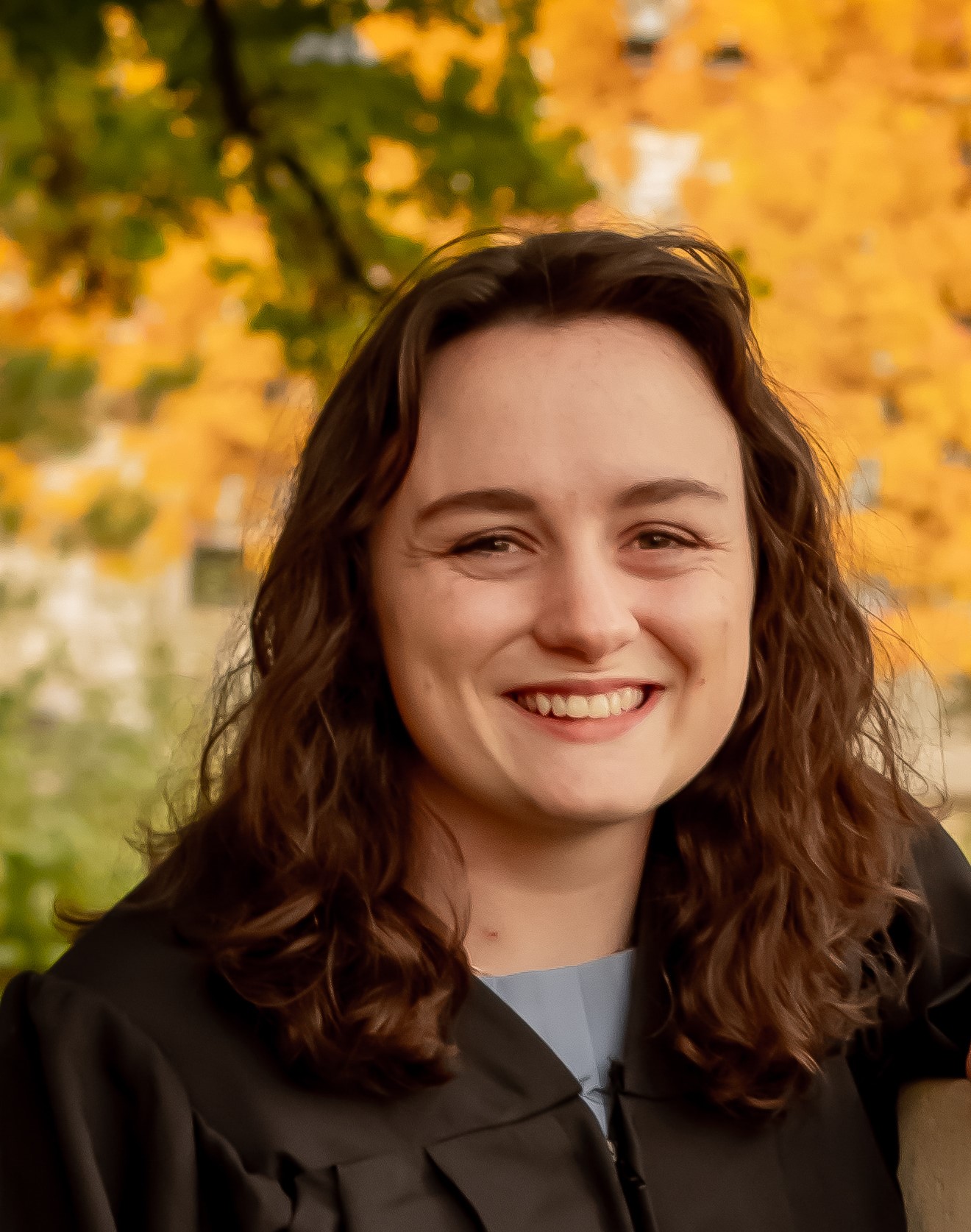
“The Ag Economics department has given me so much. It has served as a place to be curious and encourages me to take ownership in my own learning. Our faculty are some of our biggest cheerleaders and our peers quickly become some of our best friends and future professional connections. I am honored to receive this recognition, especially alongside such stellar peers,” Middleton said.
Summer Santillana, Leoti, Kansas, graduated from Kansas State University with a Bachelor of Science in Agriculture, majoring in Agricultural Economics in December 2021, with Summa Cum Laude honors, and served as the College of Agriculture graduation commencement speaker. While at K-State, Summer served as the president, vice president, and chaplain of the Alpha of Clovia 4-H Cooperative Leadership House; member of the XIX Mortar Board Chapter; member of K-State Ag Economics Club; member of K-State Minorities in Agriculture, Natural Resources, and Related Sciences Chapter; and was a student assistant in the College of Ag Office of Student and Staff Success. Throughout her college career, she was selected as a K-State Truman Scholar nominee and a recipient of the David and Susan Barton Leadership Scholarship for 2020 and 2021, she has also received her Conflict Resolution certificate. Summer has completed an internship with Union Pacific Railroad and previously worked for Archer Daniels Midland and Scott Cooperative Association. Through her work in the Office of Student and Staff Success, Summer has co-facilitated numerous programs and presentations and has assisted in leading partnerships across campus. After graduation, Summer transitioned into the role of Coordinator at the K-State College of Agriculture Office of Student and Staff Success.
“I am honored to have been selected as one of the outstanding seniors in Agricultural Economics at K-State. Coming from a small town, I didn’t know what to expect from college, but K-State Ag Econ truly provided me with professors and resources that helped it to be fun to learn and easy to find help when needed. I am proud to have come from this department and hope that it continues to grow and works to create a sense of belonging for all students,” Santillana said.
Dr. Andrew Barkley, an agricultural economics professor at Kansas State University, authored and recently released Imperfect Heroes: Teaching in Challenging Times to Motivate Student Achievement. This new book is intended to help teachers flourish during challenging times.
“The book is written for all educators, but especially those who seek renewal in their ability to help students learn and grow. Included are the inspiring and motivational stories of 12 ‘Teaching Heroes.’ Successful leaders, writers, and artists face challenges strikingly similar to obstacles faced by teachers. Iconic individuals often use life hardships as a springboard to achieve higher levels of effectiveness. Teachers can do this, too,” Barkley said.
The main idea of Imperfect Heroes is that learning about the lives of other people can provide benefits. The application of ideas from new and divergent sources to teaching practices can result in transformative growth in the ability to help others learn. Included in the book are chapters featuring Muhammad Ali, Anne Frank, Mother Teresa, and Mister Rogers to name a few.
“Teachers can use the hero stories intertwined with classroom examples to gain confidence, motivate students, and renew their commitment to making a positive contribution to the world,” he said. “In each chapter, I share common teaching experiences to stimulate reflections, dialog, and action. Emphasized throughout the book is my conviction that any teacher who desires to improve can become a great teacher, regardless of personality type, classroom style, submit matter, or pedagogical tools.”
Each chapter describes how one of the heroes motivates improvement in teaching and learning. Ideas that educators can adopt to enhance their teaching style and improve student learning are summarized.
“The reason behind why I wanted to write this book is because, teachers have an enormous positive impact on the world through enhanced student learning. This book was written to inspire teachers to continue their efforts to motivate and support student learning, and through their actions make the world a better place,” Barkley said.
His book has received positive reviews on Amazon. Kris Nelson, a retired elementary teacher and administrator, said, “Andy Barkley has created a powerful book that will inspire educators by taking a deep, insightful look into the lives of 12 unique heroes. Teachers are encouraged to mindfully rethink what makes an effective teacher by delving into significant characteristics of each of these role models. Written in a straightforward, easy to comprehend style, this book is a must read for any teacher who wants to consciously elevate his or her own teaching from a basic level to exemplary!”
Barkley specializes in agricultural and public policy at K-State and teaches undergraduate and graduate-level course. His research areas focus on the wheat industry, teaching and learning. Barkley has won numerous awards for teaching, advising, research and scholarship at the College, University, Regional and National levels. In addition to K-State, he has taught at the University of Cambridge in Cambridge, England, the University of Arizona, Quaid-I-Azam University in Islamabad, Pakistan, and the University of Chicago.
Imperfect Heroes is available on Amazon and Rowman and Littlefield websites.
Gregg Doud, Agricultural Economics alum and former Chief Agricultural Negotiator in the Office of the U.S. Trade Representative, recently spoke to Risk Management Center fellows. As one of the primary architects of the U.S.-China "Phase One" trade agreement, Doud provided students a glimpse into the complexity of the negotiation process.
“Ambassador Gregg Doud was the Chief Agricultural Negotiator for trade in agricultural products from 2018-2021. During his tenure, major new U.S. export markets, most noteworthy with China, expanded in ways that had never previously been accomplished. Negotiating trade deals with major trading partners is immensely complex from numerous perspectives. Ambassador Doud was the ideally suited to successfully navigate all aspects of new lucrative trade deals for U.S. agriculture,” Ted Schroeder, agricultural economics professor and CRMER director, said.
“Greg’s presentation opened my eyes to the complexities of trade negotiations in U.S. agriculture. I appreciated that he recognized the importance of science and economic insights in his career. I am grateful that he shared his past experiences and roles that led him to be a successful trade negotiator,” Amber Oerly, CRMER student fellow said.
In addition to sharing his experiences in trade negotiation, he also offered students several pieces of office:
- “Read, read, read. Read all that you can. You are exposed to more ideas and viewpoints by reading. This will help you see issues from different perspectives.
- Learn how to communicate. Students can find information about anything on a smart phone, but don’t know how to communicate/explain it. Learn how to clearly communicate the information you look up.
- Work on your relationships and value your peers. Build and maintain relationships with your peers and mentors throughout your lifetime.”
“Greg’s presentation opened my eyes to the complexities of trade negotiations in U.S. agriculture. I appreciated that he recognized the importance of science and economic insights in his career. I am grateful that he shared his past experiences and roles that led him to be a successful trade negotiator,” Amber Oerly, CRMER student fellow said. “He also emphasized the importance of building relationships with peers and mentors and relying on them throughout your career.”
Doud earned a Bachelor of Science degree in animal science and a Master of Science in agricultural economics from Kansas State University. In 2012, Doud was awarded the Outstanding Young Alumnus of the Kansas State University Agriculture Alumni Association and also received the Outstanding Alumnus award from the Department of Agricultural Economics at Kansas State in 2017. As a K-State alum, he maintains a close relationship to the Department and University.
“Gregg has always been an incredible supporter of K-State and especially students. He generously gives his time often to visit with K-State students about his experiences and he has done this for at least a couple of decades. Gregg is one of the most sought after speakers in agricultural trade, so his schedule is packed full. Despite that, he continues to donate his travel and time to engage with K-State students. We are proud of Gregg's accomplishments and ever grateful he continues to share his experiences and wisdom with K-State students,” Schroeder said.
Doud is currently the Vice President of Global Situational awareness & Chief Economist at Aimpoint Research. He works closely with members of the Executive Intelligence Network (EIN) and plays a major role in the development of its thought leadership priorities.
Prior to Ambassador Doud’s nomination, he was the President of the Commodity Markets Council, where he had served since 2013. He also served as a Professional Staff member of the Senate Agriculture Committee for Senator Pat Roberts and Senator Thad Cochran, and held various roles in the agriculture industry for the National Cattlemen’s Beef Association, the U.S. Wheat Associates and the agricultural commodity consulting firm World Perspectives. Ambassador Doud was raised on a dry-land wheat, grain sorghum, soybean, swine and cow-calf operation near Mankato, Kansas – which he is still involved with today. Ambassador Doud and his family live on their horse farm in Lothian, Maryland.
The agricultural economics department was awarded a Beginning Farmer and Rancher Development Program grant through the National Institute of Food and Agriculture to establish the Office for Farm and Ranch Transition. As part of the more than $745,000 grant project and funding from K-State Research and Extension, the department hired Ashlee Westerhold as director for the office.
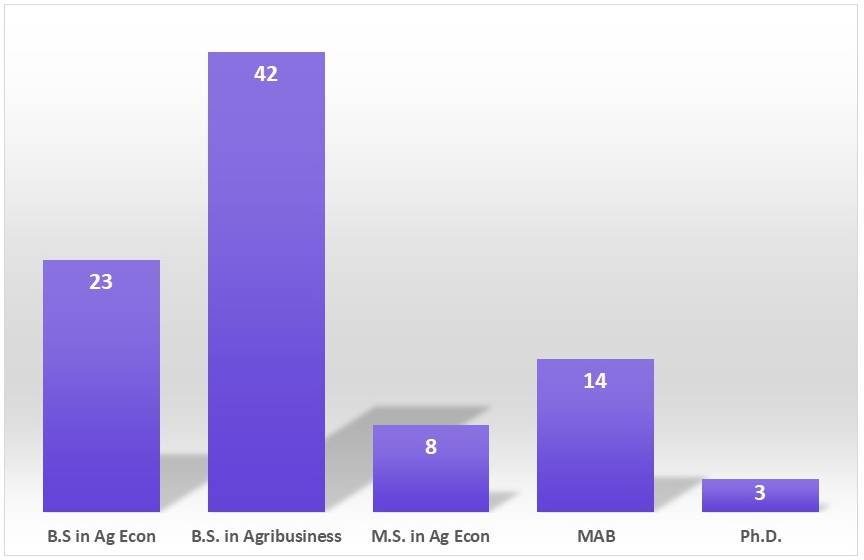
"We are excited to be launching much-needed services for farm transition out of the K-State ag economics department and delighted to bring Ashlee Westerhold onboard as an enthusiastic and skilled professional to lead this initiative," said Robin Reid, K-State Extension farm economist.
The Office for Farm and Ranch Transition will be known as AgKansitions, and will provide critical services for beginning farmers/ranchers in Kansas.
"As the average age of farm operators in Kansas continues to increase, we know many farm families will be looking to transition their operations in the near future, either to the next generation or to unrelated younger producers," Reid said. "We are excited for our department to be able to provide education and services specifically for transitioning farms and ranches and to assist beginning farmers and ranchers in being successful operators."
The Office of Farm and Ranch Transition provides three main services:
- Land-link program to introduce exiting landowners with beginning farmers/ranchers through an application and curated matching process.
- One-on-one consultations to facilitate transition of an existing farm/ranch operation.
- Extensive training program for beginning farmers/ranchers to master critical financial and business skills.
"The overall goal of this project is to equip beginning farmers/ranchers to be successful farm managers and provide resources and technical services that will enable opportunities for land access," said Allen Featherstone, agricultural economics department head. "The land-link program will bring farm families together through the matching process, they will receive one-on-one technical assistance in developing their transition plans, and general education conferences on farm transition will increase farm financial knowledge and business skills."
Partnering agencies for the office include Kansas Department of Agriculture, Kansas Bankers Association, Kansas Farm Bureau, Kansas Livestock Association, Kansas Farm Service Agency, Kansas Natural Resource Conservation Service, and Kansas Grazing Land Coalition.
Westerhold earned a Bachelor of Science in agricultural economics and a Master of Science in agricultural economics from the University of Nebraska-Lincoln. Westerhold served as an area extension educator in the Department of Agricultural Economics and Rural Sociology for University of Idaho where she created, delivered, and collaborated on major risk management programs including Farm and Ranch Succession Planning, Farm and Ranch Management, Women in Agriculture, Farm Business Benchmarking, and Agricultural Outlooks. At the University of Idaho, she has obtained more than $300,000 from five funded grants to support her research and extension efforts. She has led more than 60 workshops and presentations, produced 40 video webinars and authored 18 extension publications. Westerhold has always been passionate about succession planning because of her advisor, Dr. Ronald J. Hanson, at University of Nebraska-Lincoln. Her main objective is to keep family farms and ranches in farming and ranching.
If you or your clients are interested in meeting with Ashlee for any of the above objectives, please do not hesitate to reach out by calling her at (785) 532-4526 or email her at ashleecw@ksu.edu. We are now taking applications into the Land Link program and scheduling one-on-one consultations.
Farmers and ranchers face risk each day. Finding strategies to mitigate risk is necessary to be successful. Dr. Jennifer Ifft, associate professor of agricultural economics, recently released a nine-part series and historic performance decision aid about price risk management considerations and strategies for cow-calf producers.
Cow-calf producers with limited experience hedging, and producers who are interested in learning more about Livestock Risk Protection (LRP), including cow-calf producers with hedging experience and stockers and feedlot operators, will find helpful insights in the series.
“In today’s volatile commodity markets, price risk management is as important as ever. Cow-calf producers historically have had limited options for formal price risk management. Livestock Risk Protection (LRP) is a livestock insurance product that has been available for two decades, but recent policy changes make it more affordable to producers. LRP makes payments when national prices drop below the producer-selected coverage price,” Ifft said.
The purpose of this series was twofold: (1) to help cow-calf producers assess whether LRP might be a good fit for their operation or if they want to learn more, and (2) increase awareness of key policy characteristics and decisions for producers that are interested in LRP. Given that cow-calf producers, especially small and midsize operations, may have limited experience with hedging, which LRP is similar to, this series was designed to provide a gradual introduction to LRP.
“The series begins with key price risk management concepts and practices before presenting policy details. The series concludes with a discussion of how LRP would have performed historically for Kansas cow-calf producers,” she said.
Ifft says there are three main take aways from the series, “LRP is very similar to a put option but is more affordable and small-producer friendly. A producer can enroll anywhere from 1 to 6,000 head of cattle (feeder or fed) in a single policy (endorsement) and premiums are not due until the end of the coverage period (usually after cattle would be sold).” Another takeaway is that, “LRP is designed to replace the income that is lost due to unexpected price declines. The producer must select a coverage price, or the level to which prices must drop for an LRP payout to be triggered.” Her final takeaway is, “Like other Federal crop and livestock insurance products, LRP is designed so the producer comes out ahead in the long run. In other words, producers are more likely than not to receive more in payouts than they pay in premiums in the long run. The key phrase here is the long run: several years can pass without a payout. Having a long-term perspective and understanding how LRP works as insurance against price declines can help producer decide whether LRP is a good choice for their operation.”
The series of articles can be found at https://www.agmanager.info/crop-insurance/livestock-insurance-papers-and-information/price-risk-management-cow-calf-producers.
February 18, 2022 marked the 100th anniversary of the Capper-Volstead Act. This piece of legislation provided limited exemption from antitrust laws for agricultural producers who market their products on a cooperative basis. Before the signing of Capper-Volstead, individual producers had an economic disadvantage in the marketplace. To make markets more competitive, producers began to market, price and sell their products collectively through cooperative associations.
Early cooperatives did exist, but legal challenges loomed large. Producers marketing their products together were argued to be in violation of antitrust regulation in the Sherman Act. Senator Arthur Capper from Kansas and Representative Andrew Volstead from Minnesota sponsored the Capper-Volstead Act, which is often referred to as the “Magna Carta” of cooperatives. Senator Capper put it simply, “[The Capper-Volstead Act’s] purpose gives the farmer the same right to bargain collectively that is already enjoyed by corporations.” 62 Cong. Rec. 2057 (1922). For 100 years, the Capper-Volstead Act continues to empower agricultural producers to market cooperatively.
The Arthur Capper Cooperative Center (ACCC), a public-private partnership between Kansas State University’s Department of Agricultural Economics and Kansas Cooperative Council, is named in honor of Senator Arthur Capper. The purpose of the ACCC is to determine, develop and deliver research and education for the cooperative community.

MiKayla Deters, Sabetha, Kansas,
Rebecca Hernandez, Fort Worth, Texas,
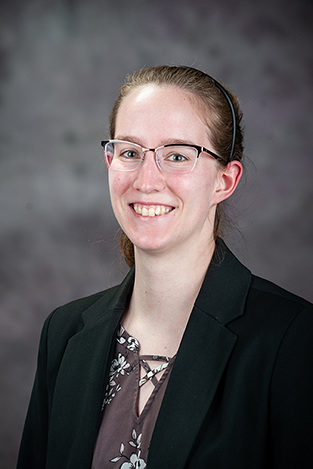
Megan Hill, Home, Kansas
Dannell Kopp, Fairview, Kansas,
Amber Oerly, Boonville, Missouri,
Riley Sleichter, Abilene, Kansas,
Thomas Smith,Windom, Kansas, agricultural economics, for service.

Hannah Shear, Winchester, Kentucky, doctoral candidate in agricultural economics.

Sanders Barbee and Michaela Forst, two students from the Agricultural Economics Department, have been chosen for the Kansas Food and Agricultural Policy Fellowship Program, or Ag Fellows. The Ag Fellows program is a leadership opportunity for Kansas students studying an agricultural field to better serve the state’s food and agricultural industry.

While this experience better prepares them to enter the workforce serving the Kansas food and agriculture industry, it also enhances their ability to advocate for laws and regulations that allow Kansas and the food and agriculture community to thrive and grow.
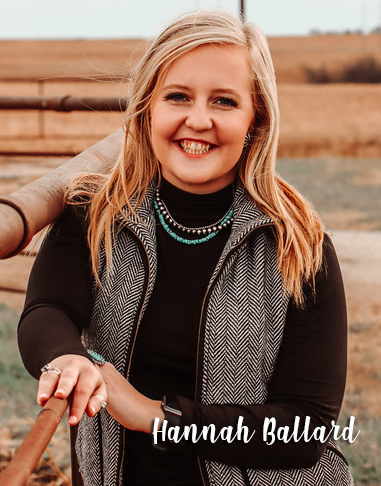
Two agribusiness students, Hannah Ballard and Kaitlin Bell, were recently elected as President and Vice President of the

Ballard is sophomore in Agribusiness. She grew up in Madison, Kansas on a cow calf, custom grazing, and row crop operation. Growing up she was actively involved in 4-H. At K-State, she has been on the wool judging team, a part of Quest freshman honorary society and the Agricultural Economics and Agribusiness club.
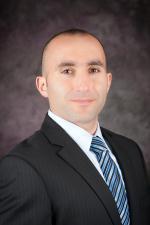
Dr. Aleksan Shanoyan
Dr. Glynn Tonsor
Dr. Andrew Barkley
Bailey Hinkle and Devin Brand
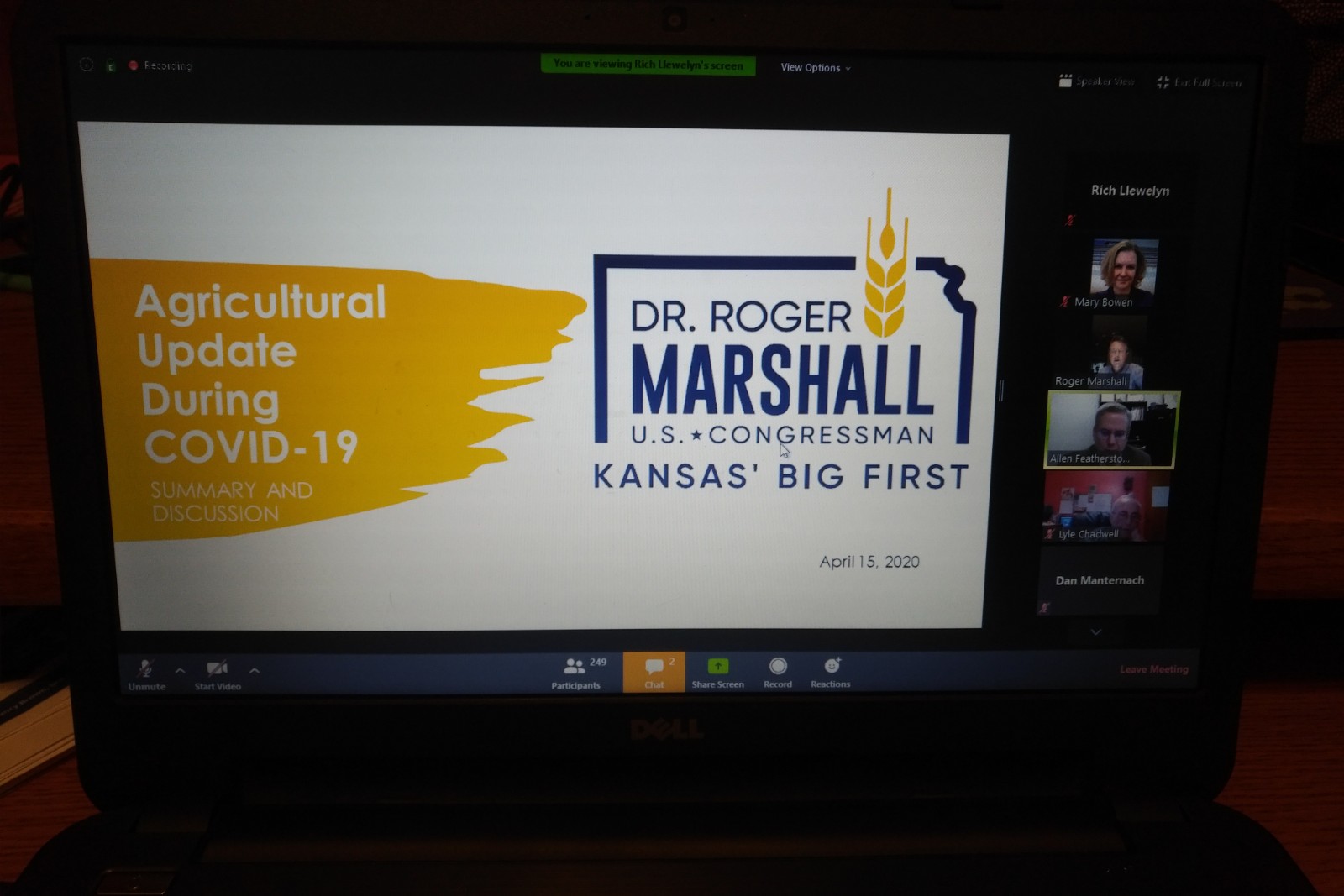
Primary topics of the webinar series have been updates on the macro economy, grain markets and planting intentions, effects on livestock markets, effects on land values, Kansas farm income, and a discussion of the CARES Act and Agriculture with Representative Roger Marshall and Senator Pat Roberts. Presentations on each subject were followed by the opportunity to discuss and ask questions.
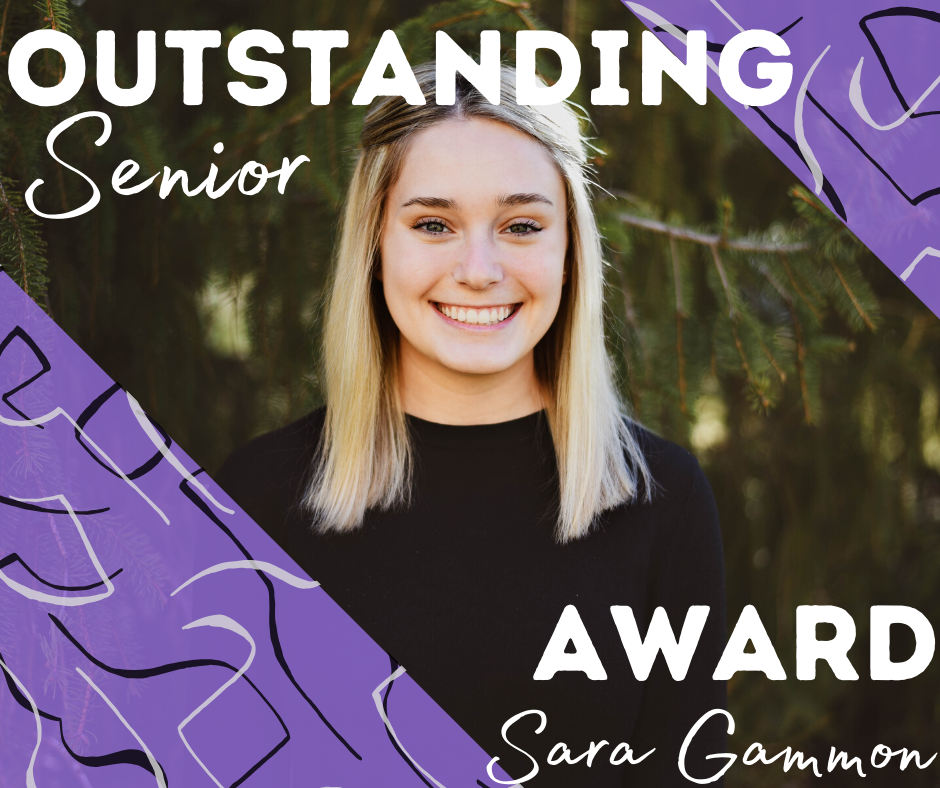
Sara Gammon, Drexel, Missouri,
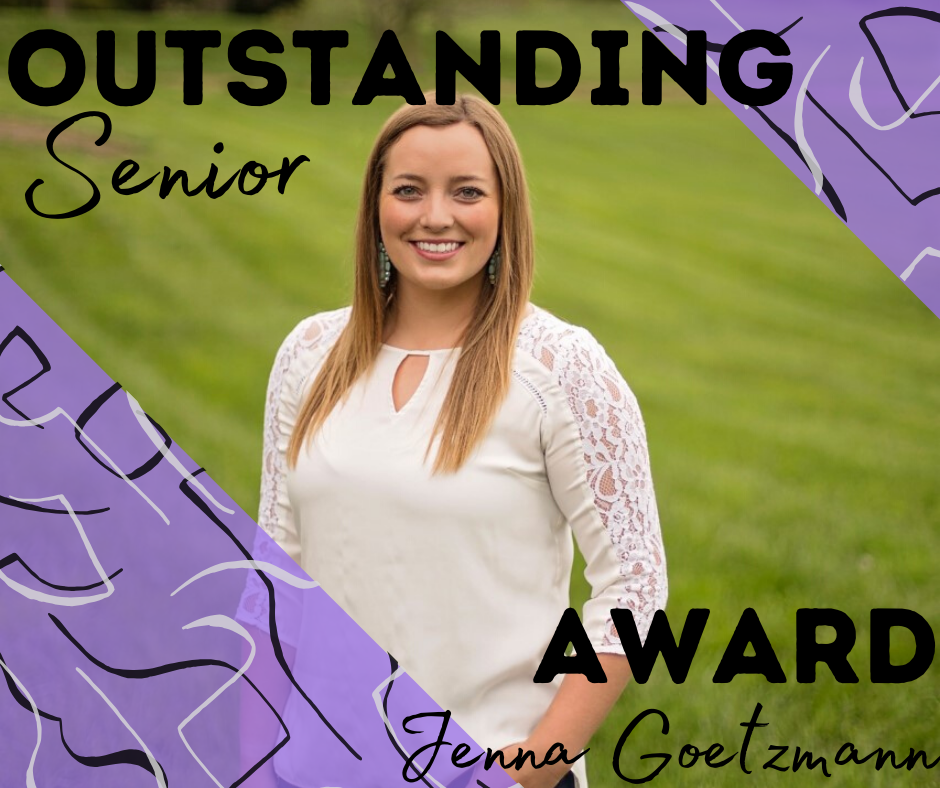
Jenna Goetzman, Gardner, Kansas,
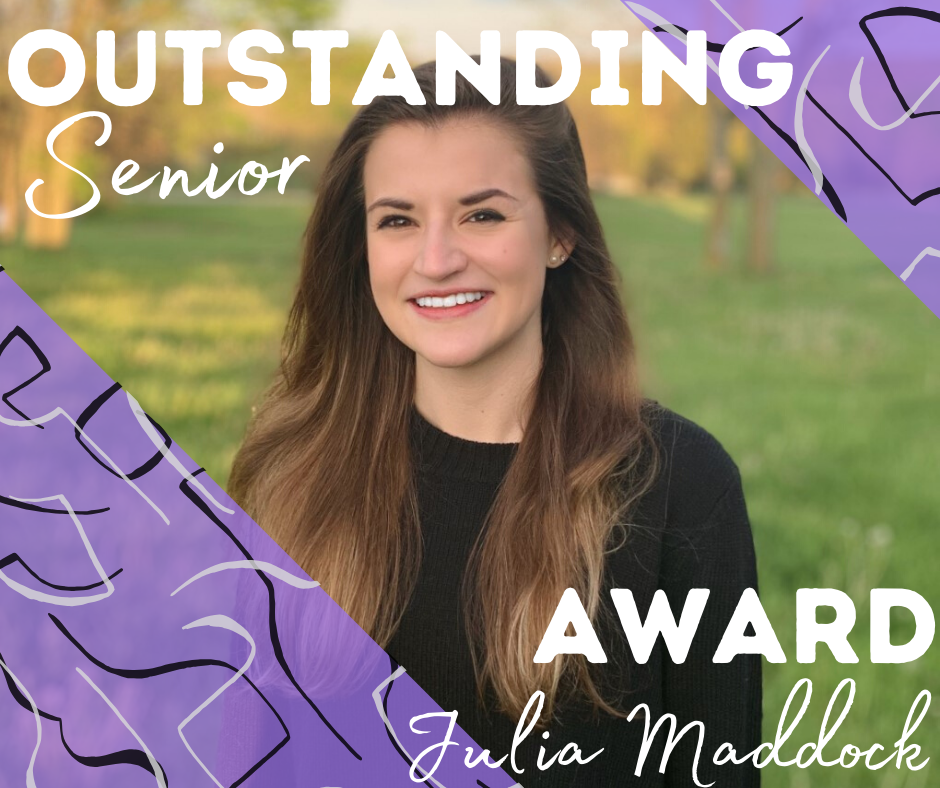
Julia Maddock, Paola, Kansas,