Phil Kirk 2025
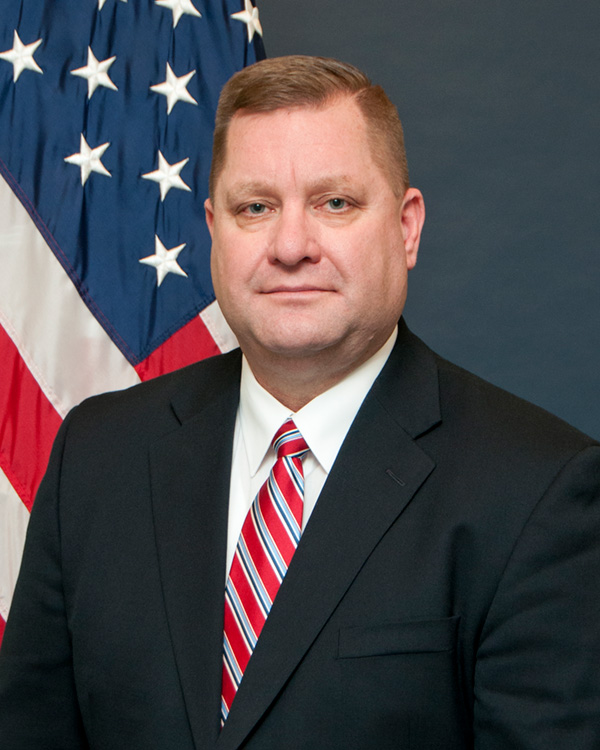 Raised on a diversified farm in northwest Kansas, Phil Kirk's journey from a small-town farm kid to a leader in federal service is a testament to the power of hard work, strong relationships, and a solid foundation from Kansas State University. Kirk, a 1989 graduate of the Department of Agricultural Economics, has been recognized with the prestigious Distinguished Alumnus Award, an honor that he says is both humbling and a capstone to a fulfilling career.
The Roots of a Leader
Kirk's path began on his family's farm near Clayton, Kansas, where he was involved in sports, student government, and the Future Farmers of America (FFA). His dedication to FFA earned him the Northwest District Star Farmer, State Farmer and American Farmer Degrees. Following in the footsteps of his older brother, Will, Kirk chose to pursue a degree in Agricultural Economics at K-State.
While at K-State, Kirk didn't just focus on his studies; he immersed himself in student life. He was a member of the Ag Econ Club and Ag Ambassadors, served as the Ag Careers Day Coordinator, and was elected Ag Student Council President. His leadership extended beyond the College of Agriculture, as he joined numerous campus honor societies and the Student Alumni Board. He also fostered lifelong friendships as a member of the Alpha Gamma Rho fraternity.
His college years were a blend of academia and practical experience. During the summer before his senior year, Kirk interned with Farm Credit Services, an experience that initially set him on a path toward agricultural lending and a return to the family farm. But a chance encounter a few weeks before graduation with a fellow K-State Agricultural Economics graduate who was a friend of his brother, presented a new opportunity—working as an agriculture specialist for U.S. Congressman Jim Slattery. Taking a "calculated risk," Kirk accepted the position, which ultimately launched a 36-year career in federal public service.
Securing the Nation's Infrastructure.
Today, Kirk is a Regional Director for the Cybersecurity and Infrastructure Security Agency (CISA), a component of the U.S. Department of Homeland Security (DHS). CISA is the nation's risk advisor, working with partners to defend against digital and physical threats and build more secure infrastructure for the future.
"CISA's mission is to lead the national effort to understand, manage, and reduce risk to the cyber and physical infrastructure that Americans rely on every hour of every day. This includes securing critical infrastructure from both cyber and physical threats and improving the nation's overall resilience. CISA personnel do this by providing risk information and mitigation advice; conducting outreach, and assessments; and coordinating and delivering training and exercise support across the public and private sectors," Kirk said.
As a Regional Director, Kirk leads a talented team of cyber, physical, and emergency communications professionals. He is responsible for executing CISA's programs in a four-state region that includes Iowa, Kansas, Missouri, and Nebraska. He serves as a senior liaison between DHS and state, local, tribal, and private sector officials, directing incident management activities and helping to restore critical infrastructure after an event.
Kirk finds immense satisfaction in CISA's mission. "I have the authority and autonomy to target and tailor services to those critical infrastructure sectors most important to the four Region 7 states," he explains. Being in the heartland of the United States, this includes a heavy focus on the Food and Agriculture Sector.
He frequently has the opportunity to connect his background in agriculture and agricultural economics education to his role as Regional Director. One such example occurred during the COVID-19 pandemic. During a directors' call, a discussion on the impact of swine processing plants having to close for periods of time came up. Members on the call were having hard time conceptualizing what euthanizing 30,000 hogs a day really meant.
"I was able to explain the physical impact by asking them to envision the space needed to bury a 300 lb. person times 30,000, which equals 9 million pounds of hogs needing to be disposed of daily. At the same time, estimating the initial economic impact, considering each pound being conservatively equal to $1.00, which is approximately $9 million a day," he said. "Once they were able to grasp the numbers, it made it easier to understand the sheer impact of the situation."
A Career of Impact and Pride
Throughout his career, Kirk has been at the forefront of some of the nation's most significant challenges. He was one of the first 10 employees to establish the U.S. Chemical Safety and Hazard Investigation Board and later became a "plank owner" of the U.S. Department of Homeland Security after the 9/11 attacks. His birthday, September 11, played a personal role in his decision to commit his career to homeland security.
One of his most profound professional memories comes from more than 20 years with the Federal Emergency Management Agency (FEMA), where he was deployed to over 40 disaster sites.
"I have met with many Americans that just had one of their worst days," he recalls. "I have had them cry on my shoulder and I have held their trembling hands. I am proud to have served on the front lines during those times, providing assistance that helped them get back on their feet and make their lives better."
In 2021, Kirk achieved a significant personal and professional milestone when he was selected for the Senior Executive Service (SES), fulfilling a challenge his late father had given him years earlier. Only a small fraction of federal employees, less than one-half of one percent (0.4%), ever reach the SES rank, which is a group of leaders within the civil service who hold positions just below the top political appointees, acting as a crucial link between these appointees and the rest of the federal workforce.
A Foundation Built at K-State
Kirk credits his education and experiences at K-State for providing the foundation for his career. The academic knowledge from the Department of Agricultural Economics not only prepared him for his first job as a congressional aide but also enabled him to speak "authoritatively to the importance of agriculture to our national and economic security" throughout his entire career.
He holds fond memories of the professors who invested in him, particularly his advisor, Dr. Arlo Biere, who challenged him to improve his grades after a difficult semester. Kirk still has the letter Dr. Biere sent him. He also remembers the guidance he received from professors like Dr. John Riley, Dr. Larry Erpelding, and Dr. David Mugler. He recalls Dr. Mugler's frequent use of Theodore Roosevelt's quote, "Nobody cares how much you know until they know how much you care."
"There was never any doubt in my mind that my professors and administrators in the Agricultural Economics Department and the entire College of Agriculture truly cared about me and wanted me to succeed," Kirk says.
Principles for a Purposeful Life
Kirk's career has been guided by 11 principles, which he formalized and shared with his team. These principles, which he says were "instilled or cultivated" during his time at K-State are:
- Do no harm
- Assume good intent
- Demonstrate integrity and honesty
- Surround yourself with good people
- Listen before speaking
- Embrace change
- Practice life-long learning
- Develop and maintain relationships built on trust
- Be authentic
- Show compassion and kindness
- Maintain work/life balance
For Kirk, giving back is a core part of his life. He mentors students through the Student Foundation and the Student Alumni Board and the Kirk family has established two endowed scholarships at K-State, along with an annual scholarship for Alpha Gamma Rho. His philanthropic passions are focused on leadership development and student mentoring, ensuring the next generation of leaders has the same opportunities he did.
As he prepares for retirement, Kirk reflects on the honor of being named a Distinguished Alumnus.
"I was honored just to be considered for this award. Considering the distinguished list of past recipients of the award, being selected for inclusion in that list is quite humbling. My roots have and will always be firmly anchored in rural America, production agriculture and agribusiness," he said. "The Agricultural Economics degree I obtained from the College of Agriculture is a foundational element of my professional career, and for that, I am thankful."