From a Kansas Orchard to University Leadership
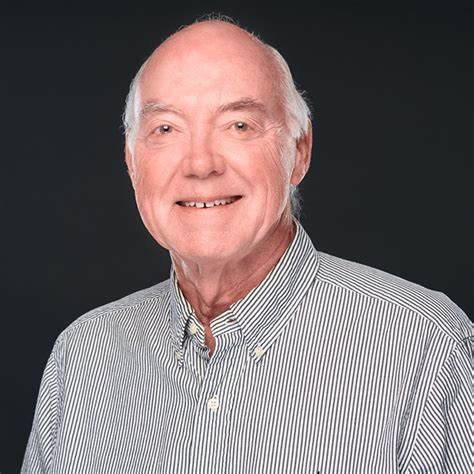 Dr. Marc A. Johnson reflects on leadership, controversy and lessons learned
Leadership journeys rarely follow a straight path. For Marc A. Johnson, the road began on a peach orchard outside Wichita and eventually led him through classrooms, agricultural economics departments, university administration and ultimately to the presidency of a major public university. Along the way, one constant remained: a commitment to principles and people.
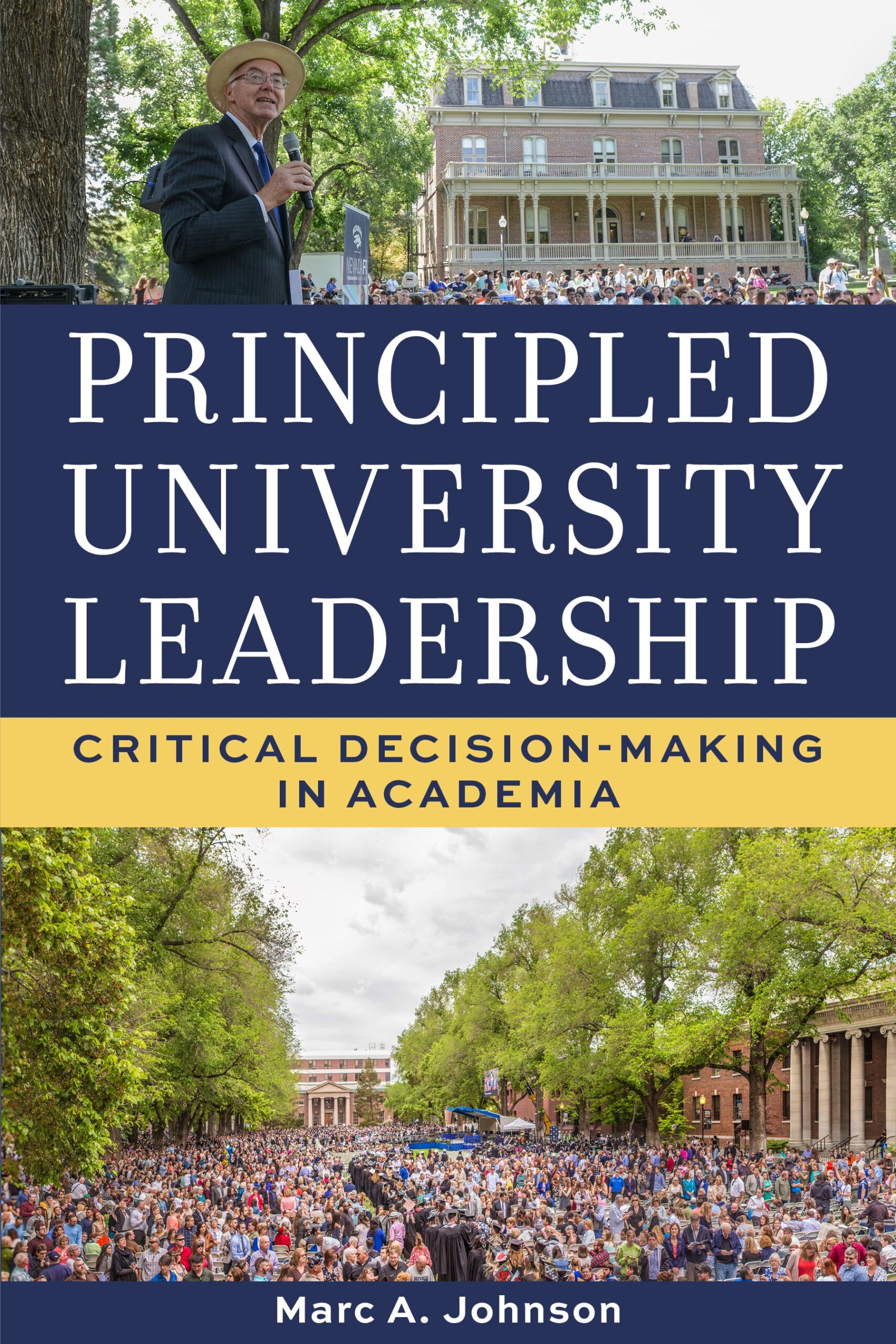 Now, after decades in higher education leadership, Johnson has reflected on those experiences in his recent book, Principled University Leadership: Critical Decision-Making in Academia, a work that examines the realities of leading institutions through challenge, controversy and change.
Johnson’s early experiences in agriculture shaped far more than his work ethic. Growing up in a farming environment sparked a curiosity about larger economic systems and the role agriculture plays in communities and nations.
“I became interested in how agriculture drives economic development,” Johnson explained, particularly in regions where agriculture serves as the backbone of local economies.
That interest eventually guided him toward economics and agricultural economics after earning a biology degree from Emporia State University and later pursuing graduate work in economics and agricultural economics at Michigan State University.
His academic career began as a faculty member in agricultural economics at Oklahoma State University (OSU) before opportunities in administration emerged. Along the way, Johnson observed leaders whose approaches influenced his own. Among them was Dr. Jim Plaxico, Johnson’s first department head while at OSU, whose example helped shape Johnson’s philosophy of working with people.
Years later, while writing his book, Johnson made an interesting discovery about his own career. Looking back across multiple institutions and roles, he realized that despite changing titles and responsibilities, he had consistently relied on the same core principles.
“I found that I had really been applying the same ideas over and over,” he reflected.
Those ideas became central themes of Principled University Leadership: confidence, diligence and humility. Johnson believes effective leaders must be willing to work hard, recognize the strengths of the people around them and share credit generously.
“Leadership reflects who you are,” Johnson said, noting that many leadership traits are shaped early in life.
His leadership principles were often tested in situations where there was no easy answer.
During his administrative career, Johnson faced several high-profile controversies that drew national attention and required difficult decisions under intense public scrutiny. While serving at the University of Nevada, Reno, he led the institution during the national conversation surrounding athlete protests after quarterback Colin Kaepernick began kneeling during the national anthem to protest racial injustice. The issue generated strong reactions from supporters and critics alike, placing university leaders in the center of a highly charged public debate.
Johnson also faced another difficult challenge when a University of Nevada, Reno, student participated in the 2017 Charlottesville, Virginia rally. Many members of the university community called for the student to be expelled because of his involvement in the demonstration.
Johnson said those moments reinforced one of his strongest leadership principles: universities have a responsibility to uphold constitutional rights, even when doing so is unpopular.
“When it comes to free speech, there is no compromise,” he said.
Although the decision drew criticism from some, Johnson believed the university could not discipline a student for constitutionally protected speech or lawful expression that occurred off campus. Instead, he focused on communicating openly with students, faculty, alumni and the public while reaffirming the university’s commitment to both free expression and an inclusive campus community.
At the same time, he emphasized that many challenges require a different approach. Questions involving resources, priorities and competing viewpoints often demand listening, communication and a willingness to seek common ground.
Rather than avoiding controversy, Johnson believes leaders must face it directly.
“You have to meet it head-on,” he said, explaining that listening carefully and communicating with all sides often helps reduce tension and build understanding.
Johnson said experiences like these ultimately became a catalyst for writing Principled University Leadership. He wanted to provide future university leaders with practical guidance for navigating controversy while remaining grounded in institutional values and principled decision-making.
Long before university presidencies and public controversies, Johnson spent an important chapter of his career at Kansas State University.
His decision to become head of K-State’s Department of Agricultural Economics was motivated by a desire to strengthen the program and build a leading department in his home state.
Johnson emphasized a management philosophy built on trust and empowerment: hire talented people, provide a clear mission, and allow them the freedom to innovate.
Among the first faculty members he hired were Dr. Allen Featherstone, Dr. Ted Schroeder and Dr. Andy Barkley, individuals who would go on to make lasting contributions to the department and profession. The three are still in the department today, with Featherstone serving as Department Head since 2013. Johnson also credited Dr. Orlan Buller, who was one of the senior faculty members in the department at the time, for supporting growth and change.Throughout his career, Johnson repeatedly returned to one idea: people are an institution’s greatest resource.
He described universities as fundamentally built on human capital and highlighted efforts at both K-State and North Carolina State University to strengthen relationships and reduce divisions among groups working toward common goals.
Today, as higher education and agriculture continue to evolve, Johnson sees expanding opportunities for future generations. Agriculture, he noted, now extends far beyond traditional production systems and increasingly intersects with fields such as environmental science, food science and technology.
For current students and young professionals, Johnson’s advice remains practical and forward-looking:
- Build a strong professional reputation and remember your current classmates are your future colleagues.
- Don’t be afraid and stay open to change.
- Embrace emerging technologies rather than fear them.
- Realize college is an investment in your future.
His own career offers a compelling example. From a peach orchard in Kansas to university leadership and now authoring a book that distills decades of experience, Johnson’s journey reflects the values that have guided him all along: principles, preparation and a belief in people.
For Johnson, leadership was never simply about titles. It was about staying grounded in values and carrying them forward wherever the journey led.
- Associate Department Head, Economics and Business, North Carolina State University (1982–1985)
- Department Head, Agricultural Economics, Kansas State University (1985–1992)
- Dean of Agriculture and Director of the Agricultural Experiment Station and Cooperative Extension Service, Kansas State University (1992–2003)
- Vice Provost for Agriculture and Outreach and Dean of Agricultural Sciences, Colorado State University (2003–2008)
- Provost and Executive Vice President, University of Nevada, Reno (2008–2011)
- President, University of Nevada, Reno (2011–2020)